These are the signs that he is cr… See more
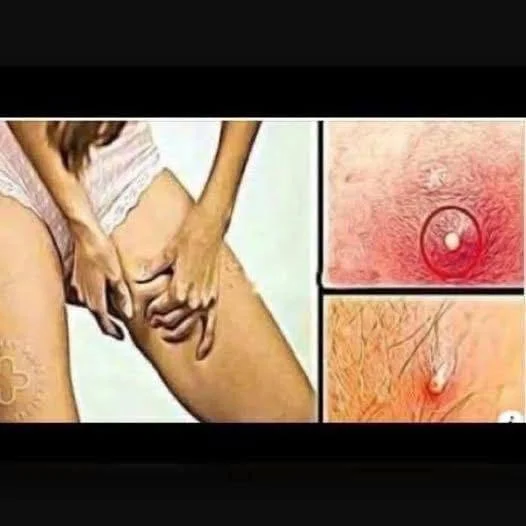
Skin irritation in the groin area is a widespread concern that can affect people of all genders and ages. The groin is a warm, moist, and often confined environment, which makes it a prime area for various dermatological issues. Understanding the causes, symptoms, and safe treatments of these conditions is essential for maintaining good hygiene and skin health. 1. Ingrown Hairs What They Are Ingrown hairs occur when hair curls back or grows sideways into the skin instead of rising up from it. This often causes red, itchy bumps that resemble pimples. In some cases, ingrown hairs can become infected, resulting in painful pus-filled lesions. Causes Shaving, waxing, or plucking hair too closely Wearing tight clothing that causes friction Naturally curly or coarse hair Symptoms Small, round bumps that may contain pus Redness and inflammation Itching or discomfort in the affected area Treatment Apply a warm compress to reduce swelling Use exfoliating cleansers to remove dead skin Avoid shaving until the area heals In severe cases, consult a dermatologist Source: American Academy of Dermatology 2. Folliculitis What It Is Folliculitis is an inflammation of the hair follicles caused by bacteria, fungi, or irritation. It appears as red or white-headed pimples around hair follicles and can be itchy or painful. Causes Bacterial infections, especially Staphylococcus aureus Friction from tight clothing Shaving or waxing Exposure to hot tubs or poorly sanitized water Symptoms Red, inflamed bumps or pustules Mild burning or itching Tender skin around hair follicles Treatment Clean the area with antibacterial soap Apply over-the-counter antibiotic ointments Use warm compresses In persistent or severe cases, oral antibiotics may be required Source: Mayo Clinic 3. Tinea Cruris (Jock Itch) What It Is Tinea cruris, commonly known as jock itch, is a fungal infection that affects the groin, inner thighs, and buttocks. It is more common in men but can affect anyone. The infection thrives in warm, moist environments. Causes Excessive sweating Wearing tight or non-breathable clothing Sharing towels or personal items Poor hygiene Symptoms Red, scaly patches with raised edges Itching, burning, or irritation in the groin Rash that may spread to thighs or buttocks Treatment Use antifungal creams like clotrimazole or terbinafine Keep the area clean and dry Avoid sharing personal items Wear loose-fitting, breathable underwear Source: Centers for Disease Control and Prevention (CDC) 4. Contact Dermatitis What It Is Contact dermatitis occurs when the skin reacts to an allergen or irritant. This reaction can happen due to detergents, soaps, synthetic fabrics, or body lotions. Causes Allergic reactions to perfumes, dyes, or latex Irritation from tight or unwashed clothing Prolonged exposure to sweat or moisture Symptoms Red, inflamed, or itchy patches Peeling or flaking skin Small blisters in some cases Treatment Avoid known irritants or allergens Use fragrance-free moisturizers Apply hydrocortisone cream to relieve itching Consult a dermatologist if symptoms persist Source: Cleveland Clinic 5. Intertrigo What It Is Intertrigo is a rash that occurs in skin folds, including the groin area. It results from friction, moisture, and lack of air circulation. Causes Excessive sweating Friction between skin folds Obesity or being overweight Wearing tight, non-breathable clothing Symptoms Red, raw skin Burning or stinging sensation Bad odor from the affected area Treatment Keep the area dry with talcum or antifungal powders Use barrier creams like zinc oxide Treat any secondary infections with antifungal or antibacterial creams Source: Healthline Preventive Tips Maintaining good hygiene and choosing the right skincare habits can go a long way in preventing groin irritation. Here are some best practices: Shave with care: Use a clean, sharp razor and shave in the direction of hair growth. Consider using shaving cream or gel to reduce friction. Choose breathable clothing: Wear cotton underwear and avoid tight synthetic fabrics. Practice good hygiene: Wash the area daily and after heavy sweating. Dry thoroughly to prevent fungal growth. Avoid sharing personal items: Towels, razors, and clothing can carry fungi or bacteria. Use fragrance-free products: Harsh chemicals or perfumes can trigger contact dermatitis. When to See a Doctor While many groin-related skin issues can be treated at home, consult a healthcare provider if: The rash persists for more than two weeks There’s severe pain, swelling, or pus You have a fever or flu-like symptoms The rash spreads quickly or returns frequently A medical professional can diagnose the condition accurately and prescribe the right treatment to prevent complications. Conclusion Groin area irritation may be uncomfortable, but it’s often preventable and treatable with proper care. Whether it’s ingrown hairs from shaving or a fungal infection like jock itch, the key is to maintain cleanliness, choose the right clothing, and address symptoms early. If in doubt, don’t hesitate to seek medical advice for a proper diagnosis and treatment plan. References: American Academy of Dermatology: aad.org Mayo Clinic: mayoclinic.org Cleveland Clinic: clevelandclinic.org CDC: cdc.gov Healthline: healthline.com


I Thought I Was Losing My Best Friend—But She Found Something I Couldn’t Give

I truly believed I was doing the right thing when I offered my best friend my childhood home after her mom passed away in August 2025. Grief had taken so much out of her, and her loud apartment only seemed to make it worse. I just wanted her to have a quiet, safe place to breathe. At first, it seemed like it was helping. She sent me pictures of soft sunsets in the backyard and told me she was finally sleeping again. I checked in on her often—maybe too often—but I thought that’s what being there for someone meant.     Then things started to shift. Her replies became shorter. Sometimes hours passed… then a whole day… then nothing at all. When I asked if she was okay, she’d say she was just tired. I tried to respect her space, but after three days of silence, I couldn’t ignore the worry anymore.   I drove to the house without telling her, telling myself I was just dropping off groceries. But the moment I got there, something felt wrong. The locks had been changed. My key didn’t work.     My chest tightened instantly. I knocked again and again, my mind racing with fear. When the door finally opened, I wasn’t prepared for what I saw.     She was sitting on the couch—safe. And next to her… was my mom. Both of them had tear-streaked faces, a box of tissues between them, warm mugs of tea in their hands. The room felt heavy—but not with danger. With something deeper.     I just stood there, confused, trying to make sense of it. My mom gently explained that she had suggested changing the locks so my friend could feel more secure. My best friend looked at me, her eyes full of both guilt and relief, and quietly told me the truth—she didn’t want to put everything on me.     I had been there for her in every way I could. But sometimes… she didn’t just need a friend. She needed a mother.   And no matter how much I loved her, that was something I couldn’t be.     In that moment, something inside me shifted. Her distance hadn’t been rejection—it had been part of her healing. She wasn’t pulling away from me… she was reaching for something she needed to survive.     Sitting there with them, I felt my heart soften in a way I didn’t expect. The love between us hadn’t disappeared. It had simply grown into something bigger.     Because real love doesn’t compete. It makes space. Even for the roles we can’t fill.

The Psychology Behind Men’s Preference for Slim Partners…See More….

Attraction has always been a fascinating subject, influenced by culture, biology, and personal preferences. While beauty standards shift over time, one pattern that researchers have observed is that many men often show a preference for slim figures. But this doesn’t mean slimness is the only standard of beauty—far from it. Attraction is complex and highly personal. However, psychology and science offer insights into why slim body types are often seen as appealing in certain societies, especially in the modern world. Understanding these reasons can help women put attraction into perspective and remind them that beauty is diverse, not limited to one body shape. 1. Evolutionary Psychology From an evolutionary point of view, physical appearance has historically been linked to survival and reproduction. Slim yet healthy body types may have signaled good health, energy, and youthfulness. While these instincts are thousands of years old, they still influence modern preferences on a subconscious level.2. Media and Cultural Influence In Western media, slim body types are often presented as the “ideal standard of beauty.” Movies, fashion, magazines, and advertising frequently highlight slim women, shaping what many men grow up perceiving as attractive. This doesn’t mean men naturally prefer slimness—it shows how cultural conditioning plays a powerful role. 3. Symbol of Youth and Vitality Psychologists suggest that slim figures are sometimes associated with youth and energy. For many men, this subconscious link can make slimness appear more attractive because it represents vitality and liveliness. 4. Perceived Health and Fitness A slim figure is often associated with fitness, balance, and self-care. Some men may see slimness as a sign of an active lifestyle and a healthy routine. While this isn’t always accurate—since people of all body shapes can be healthy—it remains a strong perception in modern society. 5. Fashion and Beauty Trends Slim figures are often celebrated in the fashion world because they align with clothing designs on runways and in magazines. Over time, this has shaped male preferences, with slimness becoming linked to style and elegance. 6. Social Conditioning from Early Age Preferences don’t appear overnight. Many men are exposed from childhood to cultural images of “ideal” body types, often portrayed as slim. These repeated patterns can shape adult attraction, even if men aren’t consciously aware of it. 7. Perception of Confidence Slimness is often (though not always) associated with self-confidence, as society tends to reward people who fit beauty standards. Men may be drawn to this confidence more than the body type itself, proving that confidence plays a key role in attraction. 8. The Role of Personal Taste It’s important to remember that not all men prefer slim figures. Attraction is deeply personal, and many men are drawn to curvy, athletic, or fuller body types. Slimness may be one common preference, but it is not a universal truth. 9. Psychological Comfort In some cases, slim figures may align with what men consider “socially acceptable.” If their peers or families reinforce slimness as the standard, they may lean toward it to feel validated. This shows how external pressure, not genuine attraction, can influence preferences. 10. Changing Standards of Beauty History shows us that beauty standards are never fixed. In the Renaissance period, fuller figures were celebrated as symbols of wealth and health. Today, slimness is often highlighted, especially in Western societies. This proves that men’s preferences are not natural laws but reflections of cultural moments. Conclusion The preference some men have for slim figures is shaped by a mix of evolutionary instincts, cultural influence, media representation, and social conditioning. But it’s important to emphasize: attraction is subjective. For every man who prefers slimness, another values curves, athletic builds, or other unique traits. At the end of the day, confidence, kindness, and authenticity often matter far more than body type. Beauty is not limited to one shape—it’s reflected in how a woman carries herself, how she treats others, and the energy she brings into the world

Eight Unexpected Signs You May Feel a Deep Emotional Connection With Someone Across Any Distance

We have all experienced that strange, almost magnetic feeling of being deeply connected to another person, even when distance separates us. It can feel mysterious, even fated, as though two minds are quietly aligned beyond ordinary explanation. Yet what we often label as destiny is better understood through the lens of psychology, memory formation, and the brain’s remarkable ability to learn patterns from human interaction over time. The sense of invisible connection is not supernatural, but it is no less profound when we understand how it is formed inside the mind. At the core of this experience is the way the brain builds internal models of the people we care about. Through repeated conversations, shared moments, and emotional exchanges, the mind gradually constructs a detailed representation of someone’s personality. It stores their tone of voice, their typical reactions, their emotional habits, and even subtle changes in expression. Over time, this mental “map” becomes so refined that predictions about their behavior feel automatic, almost instinctive. What feels like intuition is often the result of accumulated familiarity processed below conscious awareness. This process is strengthened by the brain’s natural tendency to prioritize emotionally significant information. When someone matters deeply to us, our attention system becomes highly sensitive to anything related to them. A short delay in replying to a message, a change in wording, or a slight shift in tone can feel meaningful, even when it may not objectively indicate anything unusual. The brain is essentially performing constant social monitoring, filtering every detail through the emotional importance assigned to that person. Another powerful factor that contributes to the illusion of deep connection is cognitive bias, especially selective memory. Humans tend to remember emotionally striking coincidences while forgetting the many times nothing unusual happened. If you think of someone and they happen to contact you shortly afterward, the moment feels significant and memorable. However, the countless times you thought of them without any response fade from memory. This imbalance creates the impression of meaningful synchronicity, even though it is statistically normal in a world of frequent communication. In today’s digital environment, these effects are amplified significantly. Constant messaging, social media updates, and instant notifications increase the frequency of interactions and perceived coincidences. Seeing someone’s activity online shortly after thinking about them strengthens the illusion of a shared mental link. The mind naturally searches for patterns, and modern technology unintentionally provides more opportunities for pattern recognition, even when the underlying events are unrelated. Emotional attunement also plays a major role in shaping our sense of connection. When we spend enough time with someone, we become highly skilled at detecting subtle changes in their behavior. Small variations in speech, posture, or communication style can signal shifts in mood or emotional state. While this often feels like “reading energy,” it is actually the brain applying learned experience to interpret familiar behavioral cues. The more we know someone, the more accurately we can predict how they are feeling based on minimal information. This sensitivity is closely tied to the brain’s predictive nature. Human cognition is not purely reactive; it is constantly anticipating outcomes based on past experience. When it comes to relationships, this predictive system becomes especially active. The brain compares current behavior with established patterns and quickly identifies deviations. These comparisons happen rapidly and unconsciously, which is why the resulting feeling often seems like intuition rather than analysis. Sleep and dreaming also contribute to the emotional intensity of perceived connection. During sleep, the brain processes emotional experiences and consolidates memories. People who occupy significant emotional space in our lives naturally appear more frequently in dreams. This does not indicate external influence or mystical linkage, but rather reflects the brain’s internal organization of emotionally relevant information. Dreams often combine memory fragments, emotions, and imagination into vivid experiences that reinforce emotional attachment. Another important concept is the role of intuition, which is often misunderstood as something separate from rational thought. In reality, intuition is the brain’s rapid synthesis of experience-based knowledge. It draws on accumulated patterns learned over time and delivers a fast judgment without conscious step-by-step reasoning. Because the internal processing is hidden from awareness, the result feels sudden or external, even though it is built entirely from personal experience and learned observation. These psychological mechanisms do not diminish the meaning of human connection. Instead, they highlight how sophisticated the brain is in processing relationships. The feeling of closeness, even across distance, is a reflection of how deeply the mind stores and values social bonds. Our ability to mentally simulate another person, anticipate their reactions, and emotionally resonate with them is one of the most advanced features of human cognition. Ultimately, what feels like a mysterious or mystical bond is the product of memory, attention, prediction, and emotional learning working together. The brain is constantly building and refining representations of the people who matter most to us. Even when we are apart, these internal models remain active, allowing us to carry others within our thoughts in a way that feels vivid and real. Far from being a supernatural phenomenon, this is a testament to the human mind’s extraordinary capacity for connection, empathy, and emotional continuity across time and distance.

I went to the store to buy pork ribs and came home to cook them…See More>

I was just cooking dinner when the nightmare began. One second, I was standing calmly at the stove, turning pork ribs in a hot pan while oil crackled softly around the edges. The kitchen smelled normal — garlic, seasoning, sizzling fat — the kind of ordinary comfort that comes with making a familiar meal after a long day. Then I saw it. Something pale and stringy slowly curled out from the side of the meat as it cooked. At first my brain refused to process what I was looking at. But the longer I stared, the faster panic took over. Thin. White. Slightly twisted. My stomach dropped so hard it physically hurt. One terrifying word slammed into my mind before logic had any chance to intervene: Worm. I killed the heat immediately. The pan kept hissing while I stood there staring at it in horror, unable to move for several seconds. Suddenly the entire kitchen felt contaminated. My appetite vanished so completely it was almost frightening. All I could think about was how close I had come to serving this to my family without noticing. With shaking hands, I grabbed a dish towel and carefully lifted the strange thing from the pan. The texture made it even worse. Slightly rubbery. Fibrous. Stretching unnaturally under the light. Every instinct in my body screamed that something was deeply wrong. I carried it to the kitchen table like evidence from a crime scene. For nearly an hour, I sat there examining it from every angle while my imagination spiraled completely out of control. I searched online. Zoomed in with my phone camera. Compared images. Every few minutes I became convinced I had discovered proof of some hidden contamination nightmare. Parasites. Unsafe meat. Disease. I replayed every bite of pork I’d eaten in my life and suddenly felt nauseated thinking about all of it. The more I stared, the worse it seemed. Fear has a strange way of enlarging things. That tiny object on my table began feeling monstrous simply because I didn’t understand it. My brain filled every unknown gap with catastrophe. I could practically feel dread crawling under my skin while the untouched dinner sat forgotten in the kitchen growing cold. Then eventually, after enough searching and enough panic, the truth emerged. It wasn’t a worm. Not even close. What I had found was simply a tendon — fibrous connective tissue naturally present in pork that becomes more noticeable during cooking as the meat tightens and shrinks around it. Completely ordinary. Completely normal. Something I had probably eaten dozens of times before without ever noticing. I just sat there staring at it after realizing that. Relief came first, fast and overwhelming. The horrible fear that I had nearly poisoned my family disappeared almost instantly. But disgust lingered stubbornly behind it. Knowing something is harmless doesn’t magically make it pleasant once your brain has already convinced itself otherwise. Dinner never recovered. Even after understanding what it really was, I couldn’t bring myself to eat the ribs. The image had already attached itself too deeply in my mind. Every piece of meat suddenly looked suspicious. Every strand of fat or tissue made me pause twice. Still, once the adrenaline faded, the whole experience left me thinking about something bigger than dinner. How quickly fear creates monsters. One unfamiliar detail — something completely natural seen from the wrong angle at the wrong moment — was enough to send my mind racing toward worst-case scenarios. Before facts entered the picture, panic had already built an entire horror story around a harmless piece of connective tissue. And honestly, that may have been the most unsettling part of all. Not the tendon itself. But realizing how fast the human mind turns uncertainty into terror when we don’t immediately understand what we’re seeing.

Diabetes Symptoms At Night: Top 7 Signs Of High Bl00d Sugar That Becomes Worse After 10pm

When we think of health issues, we often imagine symptoms that disrupt our busy days—feeling sluggish at the office, crashing after a heavy lunch, or experiencing sudden dizzy spells. Because of this, a lot of people mistakenly associate diabetes symptoms exclusively with daytime fatigue or thirst. However, the human body doesn’t clock out when the sun goes down. In fact, some of the most telling signs of blood sugar imbalances can become far more noticeable at night. When blood sugar levels fluctuate, the quiet of the late evening hours acts as a magnifying glass. While the body is supposed to be resting and repairing itself, a system struggling with glucose regulation is essentially working overtime. If you’ve been noticing unusual physical changes after 10 PM, it does not automatically mean you have diabetes. Yet, if these disruptions form a repeated pattern, it is a whispering warning from your body that might be worth paying attention to. Understanding these subtle, nighttime signs can empower you to recognize when it might be time to discuss your symptoms with a healthcare professional. Let’s dive into the top 7 signs of high blood sugar that tend to worsen when the lights go out. When high blood sugar disrupts your rest, the hours after 10 PM can feel endlessly long. The Top 7 Nighttime Signs of High Blood Sugar 1. Frequent Midnight Bathroom Trips (Nocturia) Waking up once during the night to use the restroom is relatively normal, especially if you had a large beverage with dinner. However, if you find yourself throwing off the covers three, four, or five times a night, it could be a red flag. When there is excess glucose (sugar) in your blood, your kidneys are forced to work entirely on overdrive to filter and absorb it. If your kidneys can’t keep up, the excess sugar is excreted into your urine, dragging fluids from your tissues along with it. This relentless cycle often peaks at night, completely ruining your sleep architecture. 2. Unquenchable Thirst Before Bed This symptom goes hand-in-hand with frequent urination. Because your body is rapidly losing fluids to flush out the excess blood sugar, you can quickly become dehydrated. You might find yourself waking up after 10 PM with a mouth as dry as cotton, craving a massive glass of ice water. This relentless, unquenchable thirst (known medically as polydipsia) is your brain’s desperate attempt to replenish the vital fluids your body is losing.   Waking up with a severely dry mouth and an intense craving for water is a classic symptom of fluid loss. 3. Night Sweats and Temperature Fluctuations Waking up drenched in sweat is an uncomfortable and alarming experience. While night sweats can be attributed to a warm room or changing seasons, they are also deeply tied to blood sugar fluctuations. Sometimes, blood sugar levels can actually drop too low during the night (hypoglycemia), causing your body to panic. In response, it releases adrenaline to prompt the liver to release stored glucose. This sudden adrenaline rush triggers heavy sweating, leaving you waking up clammy and shivering. 4. Leg Cramps or Tingling Sensations Do you ever lie down to sleep only to feel a bizarre “pins and needles” sensation in your feet, or suffer from sudden, agonizing calf cramps? Over time, prolonged high blood sugar can cause damage to the tiny blood vessels that supply your nerves, a condition known as diabetic neuropathy. Because you are lying still at night, free from the distractions of the busy day, these tingling, burning, or cramping sensations become sharply magnified and impossible to ignore.   The quiet of the night often amplifies the uncomfortable tingling and cramping caused by nerve irritation. 5. Feeling Unusually Hungry Late at Night We all get the late-night munchies sometimes, but diabetic hunger is different. Polyphagia, or extreme hunger, occurs because your body cannot properly use the glucose in your blood for energy. Even if you ate a perfectly adequate dinner at 7 PM, a lack of effective insulin means the sugar never reaches your cells. Your cells are literally starving, sending urgent signals to your brain to eat more food, often leading to intense cravings and fridge raids late into the night. 6. Restless or Interrupted Sleep Quality sleep requires a stable internal environment. When your blood sugar is on a rollercoaster, your sleep will be too. The combination of thirst, bathroom trips, temperature fluctuations, and nerve discomfort makes it incredibly difficult for your brain to sink into the deep, restorative stages of REM sleep. This chronic tossing and turning leaves you waking up feeling as though you never slept at all. 7. Blurred Vision Upon Waking If you finally manage to drift off to sleep but wake up to a blurry, out-of-focus world, high blood sugar might be the culprit. Severe spikes and drops in blood glucose can cause fluid to literally shift in and out of the lenses of your eyes. This sudden swelling changes the shape of the lens, making it difficult for your eyes to focus properly when you open them in the morning. Why Do These Symptoms Seem to Peak at Night? You might be wondering why 10 PM seems to be the magic hour for these physical disruptions. There are a few fascinating biological reasons for this: The Dawn Phenomenon & Somogyi Effect: Blood sugar levels naturally rise and fall during our sleep cycles. The body releases hormones like cortisol and growth hormone in the early morning hours, which can cause a surge in blood sugar. Hormonal Shifts: The body’s delicate hormone balance changes significantly overnight, altering how effectively your body utilizes whatever insulin is present. The Quiet Factor: Reduced physical activity and a lack of mental distractions at night simply make physical symptoms—like a tingling foot or a dry mouth—infinitely more noticeable. Evening Dehydration: Failing to drink enough water during the late afternoon and evening can concentrate your blood sugar further, increasing thirst and the urgency to urinate. When is it Time to Seek Medical Advice? Experiencing one … Read more

Girl had to be hospitalized for wanting to use a pe…See more

Teen Girl Hospitalized After Inserting Pen Inside Herself – Doctors Issue Warning A shocking case has gone viral on social media after a young girl had to be rushed to the hospital for a bizarre and dangerous act. According to reports, the teenager inserted a pen into her private parts, which led to severe internal injuries and complications. Doctors performed an emergency surgery to remove the object and stabilize her condition. Medical experts are now warning young people not to experiment with foreign objects, as it can lead to life-threatening infections or permanent damage. 🚨 Doctors urge parents to talk to their children about body safety and health. ⚠️ Never insert non-medical objects into the body – it can have serious consequences. Read more below

The BIBLE says the age difference between couples is a sin…. See more

for our sake was made to be sin (cf. 2 Cor 5:21), this saving will led the Father to burden his Son with the weight of our sins, thus, in the expression of Pope Benedict XVI, “turning of God against himself” (Deus Caritas Est, 12). For God also loves his enemies (cf. Mt 5:43-48). The dialogue that God wishes to establish with each of us through the paschal mystery of his Son has nothing to do with empty chatter, like that attributed to the ancient inhabitants of Athens, who “spent their time in nothing except telling or hearing something new” (Acts 17:21). Such chatter, determined by an empty and superficial curiosity, characterizes worldliness in every age; in our own day, it can also result in improper use of the media. 4. A richness to be shared, not kept for oneself Putting the paschal mystery at the centre of our lives means feeling compassion towards the wounds of the crucified Christ present in the many innocent victims of wars, in attacks on life, from that of the unborn to that of the elderly, and various forms of violence. They are likewise present in environmental disasters, the unequal distribution of the earth’s goods, human trafficking in all its forms, and the unbridled thirst for profit, which is a form of idolatry. Today too, there is a need to appeal to men and women of good will to share, by almsgiving, their goods with those most in need, as a means of personally participating in the building of a better world. Charitable giving makes us more human, whereas hoarding risks making us less human, imprisoned by our own selfishness. We can and must go even further, and consider the structural aspects of our economic life. For this reason, in the midst of Lent this year, from 26 to 28 March, I have convened a meeting in Assisi with young economists, entrepreneurs and change-makers, with the aim of shaping a more just and inclusive economy. As the Church’s magisterium has often repeated, political life represents an eminent form of charity (cf. Pius XI, Address to the Italian Federation of Catholic University Students, 18 December 1927). The same holds true for economic life, which can be approached in the same evangelical spirit, the spirit of the Beatitudes. I ask Mary Most Holy to pray that our Lenten celebration will open our hearts to hear God’s call to be reconciled to himself, to fix our gaze on the paschal mystery, and to be converted to an open and sincere dialogue with him. In this way, we will become what Christ asks his disciples to be: the salt of the earth and the light of the world (cf. Mt 5:13-14).

THEY THOUGHT SHE WAS HELPLESS UNTIL SHE FOUGHT BACK THE SHOCKING ATM AMBUSH OF A SEVENTY SEVEN YEAR OLD GRANDMOTHER WHO REFUSED TO SURRENDER

Winifred, a seventy-seven-year-old woman, looked like an easy target as she used an ATM on an ordinary morning. Three men moved in, clearly expecting her to panic and hand over her money without resista… Instead, when one of them reached for her cash, she fought back immediately. She struck one attacker with her elbow, held tightly to her card, and refused to let them take control of the situation. What changed everything was not just her physical resistance, but her voice. She shouted loudly enough to draw attention, and as nearby people began moving toward the scene, the attackers realized their plan had failed and ran away empty-handed. Afterward, Winifred became a symbol of courage in her community. Her story reminded people that age does not equal weakness, and that the strength built through a lifetime can appear in a single moment when it matters most.

These are the signs that he is cr… See more

Oral cancer is a serious and often silent condition that can develop in the lips, tongue, gums, inner cheeks, or under the tongue. Because it’s typically painless in its early stages, many cases go unnoticed until they’ve advanced. Regular dental check-ups — at least twice a year — are one of the most effective ways to detect warning signs early and prevent complicat… Common early symptoms include persistent mouth sores, white or red patches, swelling, unexplained lumps, difficulty swallowing, or changes in voice. These symptoms can easily be mistaken for minor issues, but if they last longer than two weeks, professional evaluation is essential. Dentists often identify oral cancers during routine exams, emphasizing the importance of consistent oral care and vigilance. Risk factors include smoking, chewing tobacco, heavy alcohol use, prolonged sun exposure, and HPV infection. Poor oral hygiene, chronic irritation, and weakened immunity can also increase risk. Quitting tobacco, reducing alcohol, using lip protection with SPF, and maintaining good dental hygiene all play vital roles in prevention. Early diagnosis can make the difference between simple treatment and life-threatening progression. Oral cancer awareness isn’t just for smokers or drinkers — it’s for everyone. Paying attention to subtle changes, attending regular check-ups, and seeking prompt medical advice can save lives. When it comes to oral health, prevention and early action are the best protection.