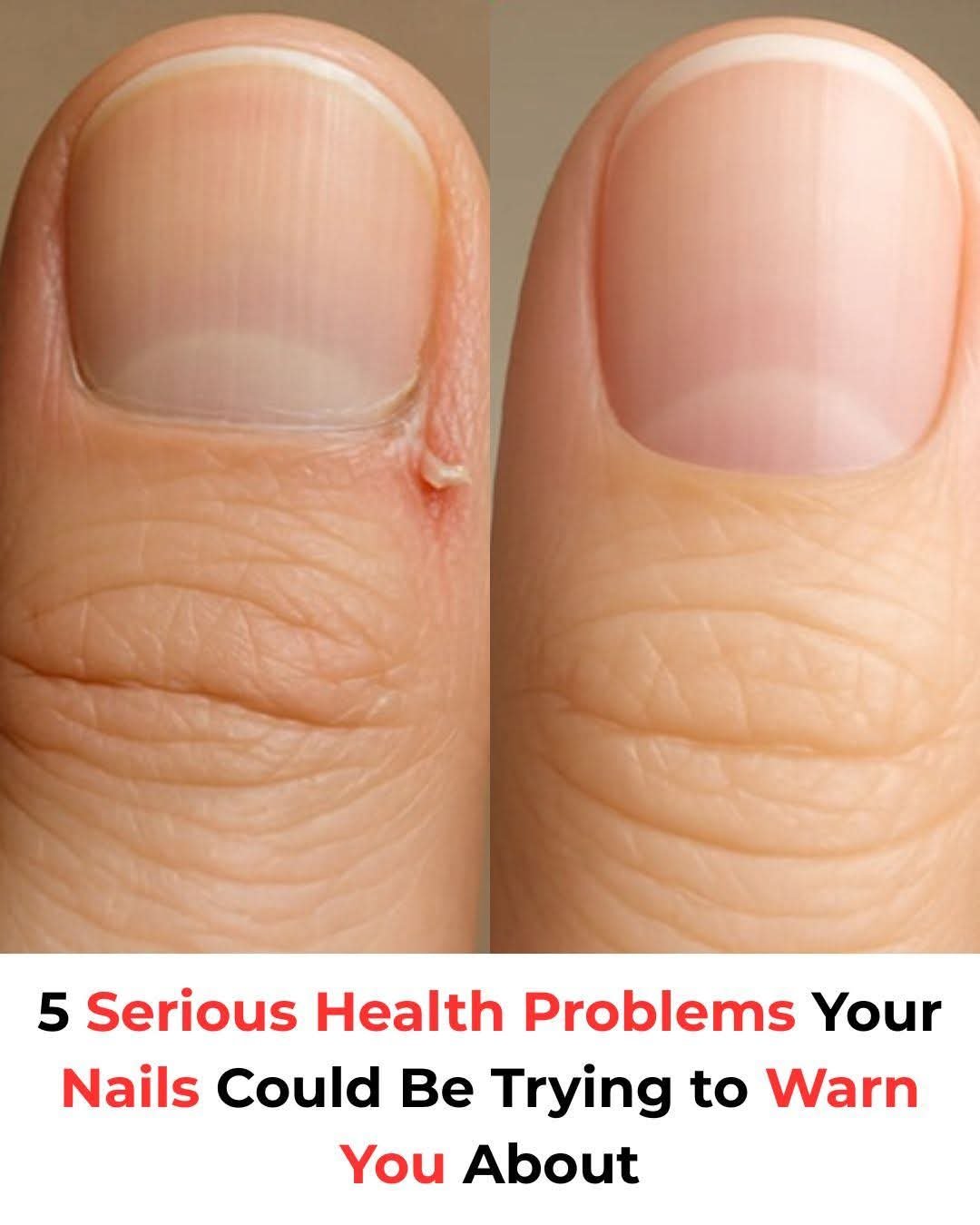
Your nails are more than just a canvas for polish—they can be subtle indicators of what’s going on inside your body. The image shows a damaged nail with a split and rough cuticle, contrasting with a healthy, smooth nail. Changes in nail texture, color, or shape often signal underlying health issues that deserve attention. Here are five medical conditions commonly linked to nail abnormalities:
1. Nutrient Deficiencies: Brittle, splitting, or ridged nails (like the left finger in the photo) can indicate lack of iron, zinc, or biotin. Improving your diet with protein, vitamins, and minerals can restore nail health.
2. Fungal Infections (Onychomycosis): Discoloration, thickening, or crumbling nails may be a sign of fungal invasion. Treatment usually involves antifungal meds or topical therapies prescribed by a doctor.
3. Thyroid Disorders: Very thin, soft nails can suggest hyperthyroidism, while thick, slow-growing nails may point to hypothyroidism. Nail changes often accompany other symptoms like fatigue or weight shifts.
4. Psoriasis: Pitting, ridges, or nail separation (onycholysis) frequently appear in psoriasis patients. Managing skin psoriasis can also improve nail appearance.
5. Heart or Lung Issues: Clubbing—where nails curve around fingertips—can indicate chronic low oxygen levels linked to cardiovascular or respiratory diseases. This needs medical evaluation.
What to Do If You Notice Changes- Inspect your nails regularly for splits, discoloration, or shape shifts.
– Keep nails trimmed and moisturized to prevent damage.
– Consult a healthcare professional if abnormalities persist or are paired with other symptoms. Early diagnosis can address the root cause.
Nails act like tiny health detectives, giving clues about your overall wellbeing. Paying attention to them helps catch problems before they become serious
