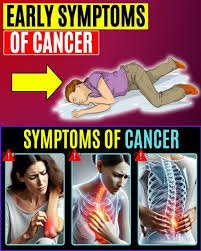
The picture highlights “early symptoms” and “cancer symptoms,” using illustrations of people experiencing pain, fatigue, and discomfort. While the intention may be to raise awareness, it’s important to understand that many images circulating online can be misleading or overly simplified. Cancer is a complex disease, and its early signs vary widely depending on the type and stage.
1. Misconception About “Early Symptoms”
The image shows a person lying on the floor, suggesting weakness or collapse as an early sign of cancer. In reality, sudden collapse is not a common early symptom of cancer. Early-stage cancers often present with mild, vague symptoms—or sometimes no symptoms at all.
2. Pain and Inflammation
The picture also shows people experiencing:
Arm or joint pain
Chest discomfort
Back pain
While pain can occur with certain cancers, it typically appears later when a tumor grows or spreads. Early cancers rarely cause severe or sudden pain. Joint inflammation or redness (as shown in one illustration) is not a typical cancer warning sign either—it is more often related to infection, arthritis, or injury.
3. Symptoms That Can Actually Indicate Cancer
Although the image exaggerates some signs, it does touch on the idea that physical discomfort may signal something deeper. Here are early cancer symptoms recognized by medical experts:
Unexplained weight loss
Persistent fatigue
A lump or swelling that does not go away
Persistent cough or difficulty swallowing
Unusual bleeding
Changes in bowel or bladder habits
Skin changes (new or changing mole)
These symptoms do not mean someone has cancer—but they should not be ignored.
4. Why Accurate Awareness Matters
Cancer awareness is crucial, but misinformation can create unnecessary fear or delay proper medical evaluation. Instead of relying on viral images, it’s important to understand medically verified signs and seek expert help when something feels wrong.
5. What To Do If You Notice Concerning Symptoms
If you or someone you know is experiencing persistent or unexplained symptoms:
Consult a doctor
Get recommended screenings
Avoid self-diagnosis
Rely on credible medical sources
Conclusion
The picture attempts to highlight cancer symptoms, but it oversimplifies a very complex issue. Real cancer warning signs are subtle and vary depending on type. Understanding medically accurate symptoms empowers people to seek help early—and early detection can save lives.
