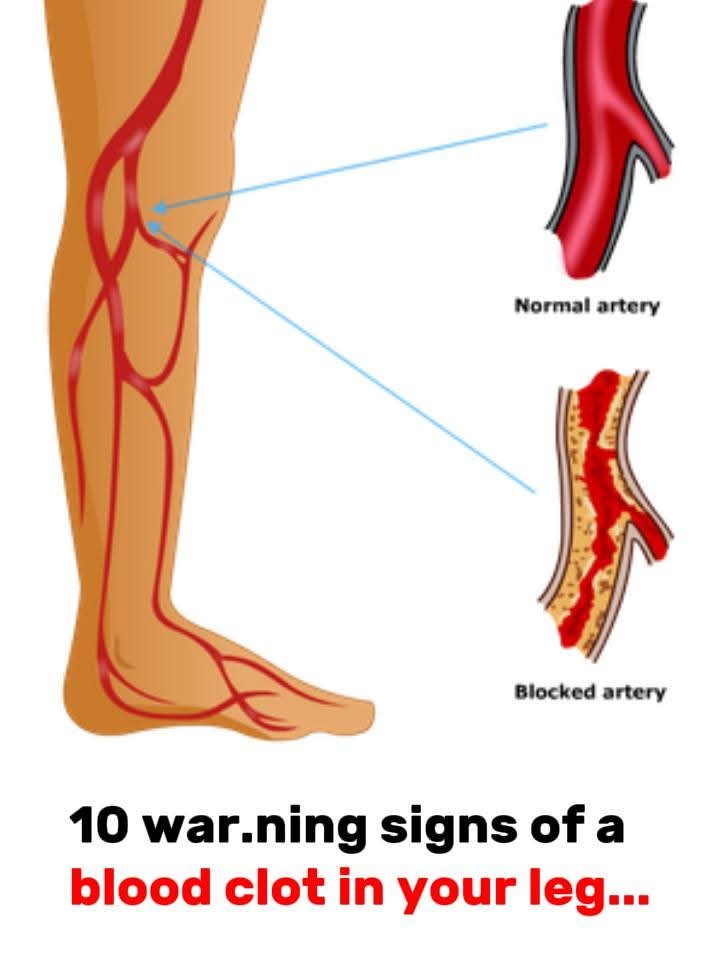
A blood clot in the leg—most commonly known as Deep Vein Thrombosis (DVT)—is a serious medical condition that requires immediate attention. The image highlights the difference between a normal artery and a blocked one, showing how blood flow can be restricted when a clot forms. Understanding the early warning signs can help prevent life-threatening complications such as a pulmonary embolism, where the clot travels to the lungs.
Below are 10 important warning signs that may indicate a blood clot in your leg:
1. Swelling in One Leg
Sudden swelling, usually in one leg, is one of the most common symptoms. It may occur in the calf, ankle, or the whole leg.
2. Pain or Tenderness
The pain may feel like a cramp or soreness and often begins in the calf. It may worsen when walking or standing.
3. Warmth in the Affected Area
A leg with a clot may feel significantly warmer than the other leg due to restricted blood flow.
4. Red or Discolored Skin
The skin around the affected area may turn red, purple, or bluish.
5. Visible Surface Veins
Veins on the leg may appear more noticeable or bulging due to pressure buildup.
6. Tight or Heavy Feeling
You may feel as though your leg is unusually heavy or tight, especially in the calf region.
7. Throbbing Sensation
A persistent throbbing, especially when standing or walking, can indicate poor blood circulation.
8. Pain When Flexing the Foot
If flexing your foot upward increases the pain, it may be a sign of DVT (known as Homan’s sign).
9. Leg Fatigue
The leg may tire more easily or feel weak compared to the other.
10. Mild Fever
In some cases, the body may react to a clot with a low-grade fever.
—
Why Early Detection Matters
A blood clot in the leg can quickly become dangerous if not treated. If the clot travels to the lungs, it can cause a pulmonary embolism, a life-threatening emergency marked by chest pain, shortness of breath, rapid heartbeat, or coughing up blood.
—
When to Seek Medical Help
If you notice sudden swelling, sharp pain, or skin discoloration in your leg, seek medical care immediately. Only a healthcare professional can diagnose and treat DVT through tests such as ultrasound or blood work.
