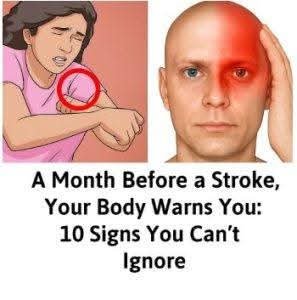
When a stroke is looming, the body often drops subtle hints weeks in advance. Recognizing these early signals can be the difference between a full recovery and severe damage. Below are 10 common signs that may appear up to a month before a stroke strikes, illustrated by the images of a woman clutching her arm and a man experiencing a headache.
1. Sudden numbness or weakness – especially on one side of the body, like the tingling in the woman’s arm (red circle). It can affect the face, arm, or leg.
2. Severe headache – an intense, unusual pain, as shown by the man’s red‑glowing head, often described as a “thunderclap” headache.
3. Vision problems – blurred or double vision, or sudden loss of sight in one eye.
4. Dizziness or loss of balance – feeling unsteady or experiencing vertigo without a clear cause.
5. Trouble speaking – slurred speech or difficulty finding the right words.
6. Confusion or mental fog – sudden difficulty understanding or concentrating.
7. Chest pain or palpitations – unexplained heart racing that can accompany stroke precursors.
8. Transient ischemic attacks (TIAs) – mini‑strokes with temporary symptoms that resolve quickly.
9. Unexplained fatigue – extreme tiredness that interferes with daily activities.
10. Changes in mood or behavior – sudden irritability or depression without a clear reason.
What to Do If You Notice These Signs- Seek medical help immediately. Early evaluation can prevent a full‑blown stroke.
– Call emergency services (e.g., 112 or 15 in Pakistan) if symptoms are severe or sudden.
– Keep a symptom diary to track when signs appear and how long they last – useful for doctors.
Prevention Tips- Manage blood pressure and cholesterol through diet, exercise, and medication (if prescribed).
– Quit smoking and limit alcohol.
– Maintain a healthy weight and stay physically active.
– Monitor chronic conditions like diabetes or atrial fibrillation.
> Bottom line: The body gives warning flashes before a stroke. Pay attention to numbness, headaches, vision changes, and other listed signs, and act fast to get professional care.
