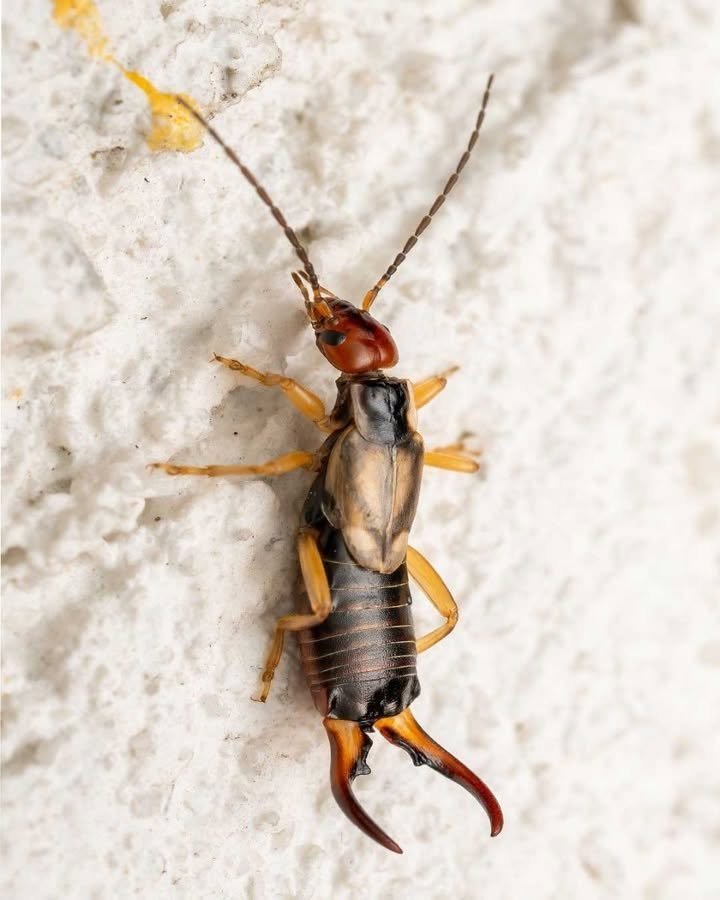
Earwigs are the creepy-crawlies in the photo, instantly recognizable by their elongated, flattened bodies and the signature pair of pincers (cerci) at the tail end. Scientifically known as Dermaptera, earwigs are common insects found worldwide, often hiding in damp, dark spots like under rocks or in garden debris.
The Earwig: Anatomy & BehaviorThe insect in the image displays the classic earwig features: a reddish-brown head, yellowish legs, a dark segmented abdomen, and prominent forceps‑like cerci. These pincers are used mainly for defense and mating rituals, not for pinching humans (though a defensive nip can happen if they feel threatened). Earwigs are nocturnal omnivores, feeding on decaying plant matter, small insects, and occasionally live plant tissue.
Myths vs FactsA popular myth claims earwigs crawl into human ears and lay eggs, hence the name. This is largely untrue; they have no preference for ears over other hiding spots. Another misconception is that their pincers are dangerous – they’re mostly harmless to people.
Managing EarwigsIf you encounter earwigs in homes or gardens, they usually indicate high moisture or organic debris. Simple control methods include reducing dampness, sealing entry points, and cleaning up leaf litter. For heavy infestations, baits or insecticide dusts labeled for earwigs can help.
Would you like tips on preventing earwigs in your home or garden, or more details about their ecological role?
