Blocked arteries (arterial blockage) happen when fatty deposits (plaque) build up inside the blood vessels, narrowing the pathway for blood flow. When the arteries that supply the heart or brain get clogged, the body throws out warning signals that you shouldn’t ignore.
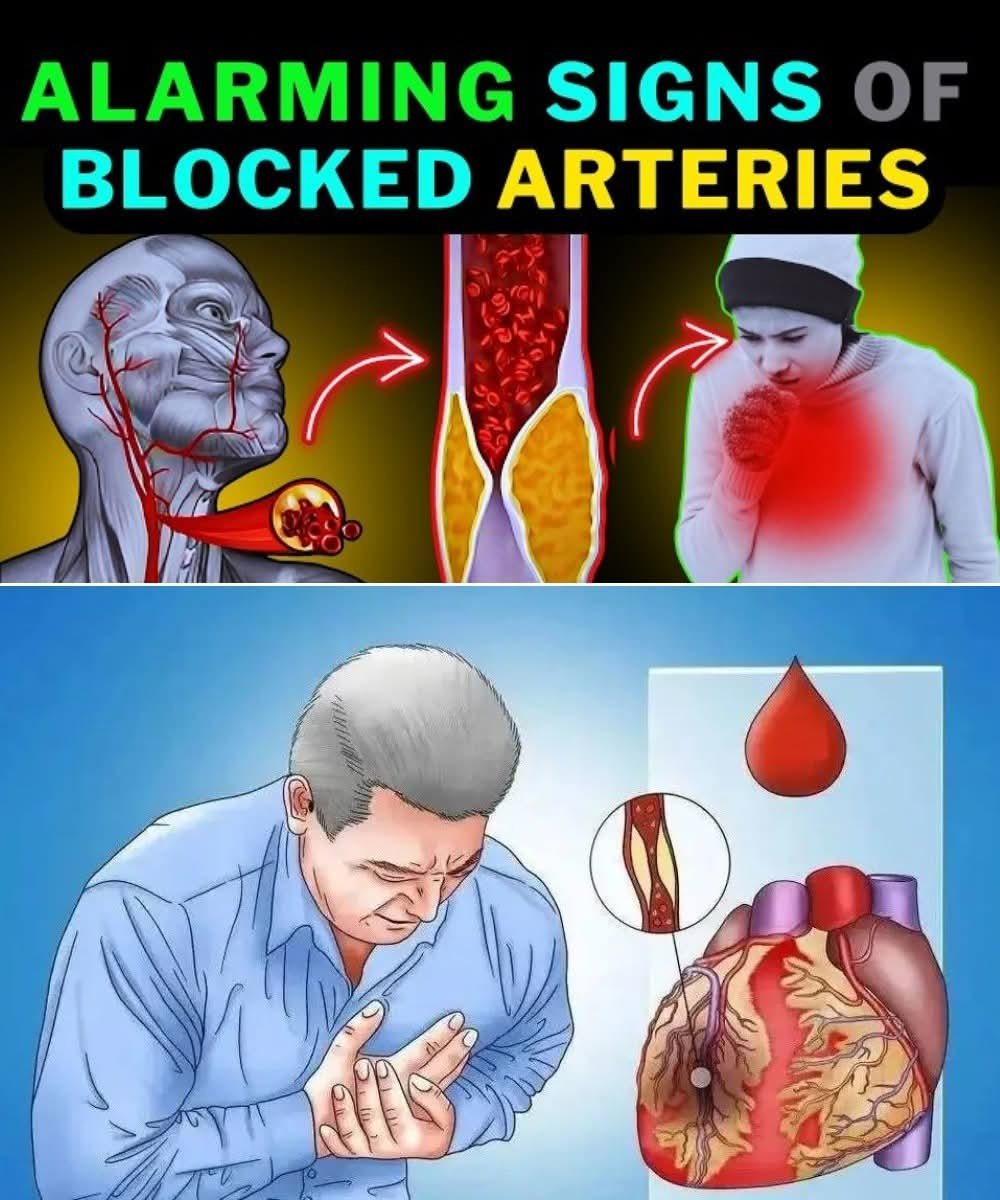
What the picture shows1. Top section: A profile of a person with highlighted arteries in the neck and chest. The inset illustrates an artery narrowed by yellow plaque, restricting red blood cells. The result is shown on the right—a woman clutching her chest, indicating heart pain or angina caused by reduced blood flow to the heart muscle.
2. Bottom section: An older man pressing his chest with both hands, signaling discomfort. Next to him is a cutaway of the heart with a blocked coronary artery and a blood droplet, representing possible heart attack (myocardial infarction) due to complete blockage.
Key warning signs of blocked arteries- Chest pain or angina: Tightness, pressure, or squeezing in the chest, often triggered by exertion and relieved by rest.
– Shortness of breath: Feeling out of breath even with light activity, because the heart isn’t getting enough oxygen.
– Pain in the neck, jaw, or arms: Discomfort can radiate from the chest to other upper body parts.
– Unusual fatigue: Persistent tiredness, even after rest, due to poor blood circulation.
– Heart attack symptoms: Sudden intense chest pain, sweating, nausea, or a feeling of impending doom when an artery is fully blocked.
What to do if you notice these signs1. Seek medical help immediately: Call emergency services if you experience severe chest pain or suspect a heart attack.
2. Get a medical evaluation: Doctors may run tests like ECG, echocardiogram, or angiography to check artery blockage.
3. Manage risk factors: Control blood pressure, cholesterol, diabetes, and quit smoking to slow plaque buildup.
4. Lifestyle tweaks: Adopt a heart‑healthy diet, regular exercise, and stress management to improve arterial health.
Bottom lineThe image highlights how arterial blockage can lead to chest pain and heart attacks. Recognizing the alarming signs early and acting fast can save lives. If you or someone you know experiences these symptoms, don’t delay—get professional medical care right away.
Do you want tips on preventing arterial blockage or details about diagnostic tests for heart disease? 🌟
