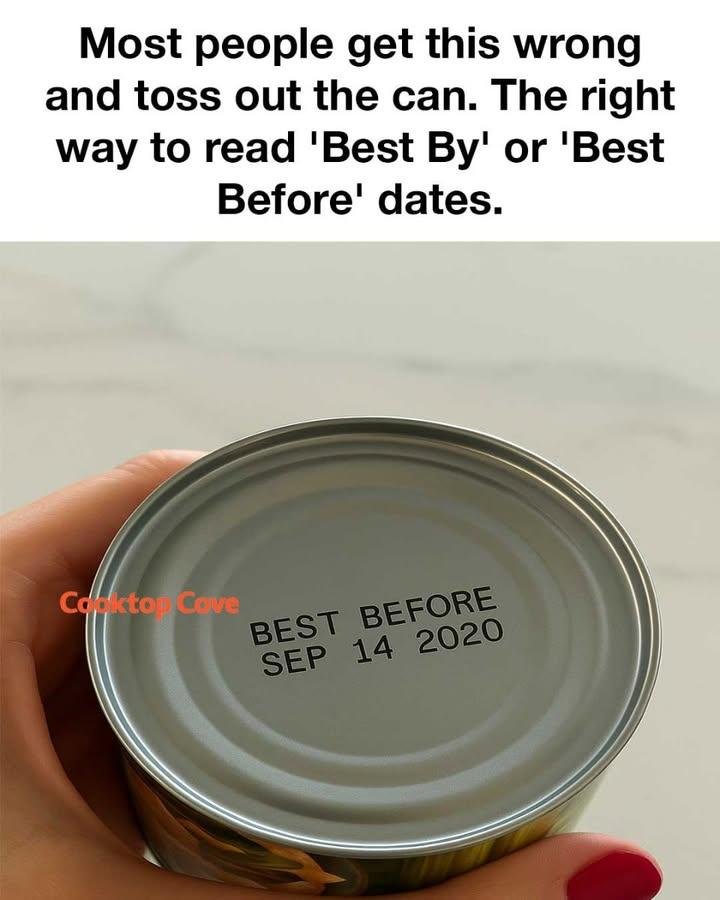
The label “Best Before” (or “Best By”) on food packaging is often misunderstood, leading many people to throw away perfectly good products. This date indicates the manufacturer’s estimate of when the product will retain its optimal quality, flavor, texture, and nutritional value – not an expiration date that signals safety.
What the date really means1. Quality indicator: The food will be at its best taste and texture before this date.
2. Safety isn’t guaranteed after: The product may still be safe to consume past the date, depending on storage conditions.
3. Storage matters: Properly stored canned or packaged goods can often be used weeks or months after the “Best Before” date without health risks.
How to read the label correctly- Look for the phrase “Best Before” or “Best By” followed by a date (e.g., SEP 14 2020).
– Interpret it as a quality benchmark, not a strict deadline for disposal.
– Check the product’s condition (smell, appearance, seal integrity) to decide if it’s still usable.
Tips for handling “Best Before” products- Inspect: Open the can or package and sniff or visually check for spoilage.
– Store properly: Keep items in cool, dry places to extend shelf life.
– Use judgment: If the product looks or smells off, discard it—quality guidelines are secondary to safety.
Bottom lineDon’t automatically toss a can just because the “Best Before” date has passed. Understand it as a quality guide, not a safety expiration, and use your senses to decide whether the food is still good to eat.
Want to know how to extend shelf life for specific types of canned goods?
