Vintage Thimbles: Tiny Treasures of Craftsmanship & History
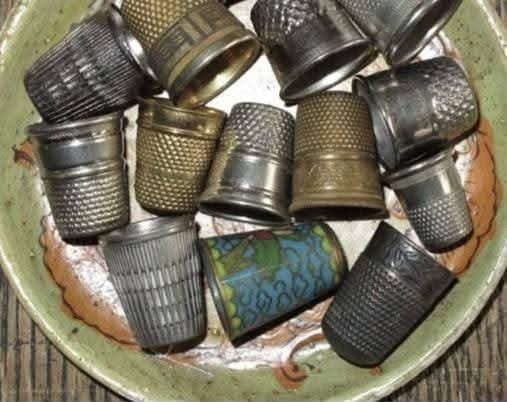
Thimbles have been humble yet essential tools for seamstresses and tailors for centuries, protecting fingertips from needle pricks while sewing. The ones in the photo display a variety of styles—metallic silver, brass, and textured designs that showcase artisan craftsmanship.
Historical Significance- Ancient origins: Early thimbles date back to Roman times, made from leather or bronze.
– Medieval craft: In the Middle Ages, thimbles became decorative metal pieces, often engraved with patterns.
– Collectible status: Over time, thimbles evolved into collectible items, valued for their design and historical provenance.
Types & Materials- Metal thimbles: Commonly steel or brass, with knurled surfaces for grip.
– Decorative finishes: Some feature intricate etchings or antique gold tones, turning them into miniature artworks.
– Specialty designs: Unique shapes or camouflage patterns (like the green-blue thimble in the bowl) add个性 to collections.
Collecting ThimblesCollectors often seek thimbles for their aesthetic value, rarity, or historical connection to specific eras or makers. Vintage pieces like the ones in the bowl can be displayed in decorative dishes, turning everyday sewing tools into charming décor.
Caring for Thimbles- Clean metal thimbles with mild soap and dry them to prevent rust.
– Store them in protective cases or bowls, as seen in the photo, to avoid scratches.
Thimbles may be small, but they carry a rich legacy of craftsmanship, utility, and collectible charm that celebrates the art of sewing and design.
Want to know more about how to start a thimble collection or where to find antique thimbles?
