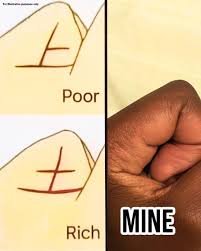
Palmistry, also known as chiromancy, is the ancient art of interpreting the lines, shapes, and features of the hand to gain insight into a person’s character, life path, or potential destiny. Practiced for thousands of years in cultures ranging from India and China to Greece and Persia, palmistry continues to intrigue people around the world.
One popular belief in palmistry is that certain lines or markings can indicate a person’s financial fortune—whether they’re likely to become wealthy or remain in modest means. While this idea is more symbolic than scientific, it has deep roots in folk wisdom and cultural traditions.
📸 Visual Symbolism: “Poor” vs. “Rich” Palms
In some depictions (such as the image described), different crossed line patterns near the thumb are shown with contrasting labels:
-
“Poor” Hand: A light or shallow cross near the base of the thumb suggests limited financial fortune or challenges in wealth accumulation.
-
“Rich” Hand: A deeper, more pronounced cross in the same area is said to indicate financial success, prosperity, or a strong potential for wealth.
🔍 These interpretations are not universally agreed upon, but they reflect a symbolic reading—connecting the visible lines on a person’s palm to deeper meanings about their life or character.
🌍 Cultural Significance of Palm Lines
Throughout history, palmistry has held unique importance in different cultures:
-
-
In Indian Vedic palmistry, lines are linked to planetary influences and karma.
-
-
