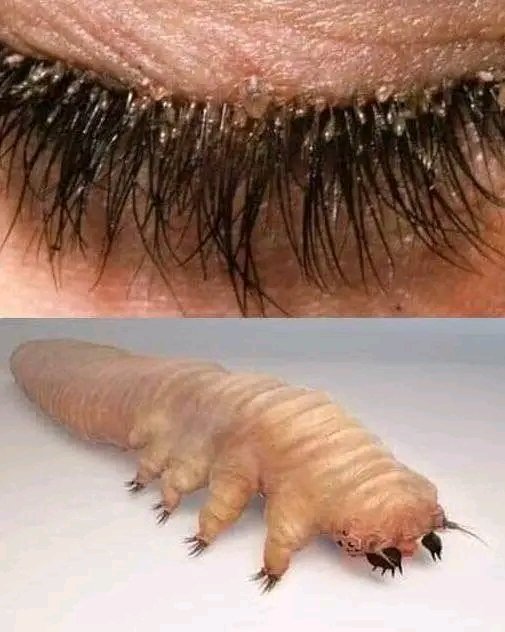
Two elements: a close-up of an eyelash line with visible white debris at the base, and a magnified rendering of a Demodex mite. Together they illustrate a common but often overlooked skin condition involving eyelash follicles.
What Are Demodex Mites?
Demodex are microscopic mites that naturally live in human hair follicles and sebaceous glands, particularly around the face, nose, and eyelashes. There are two main species that affect humans: Demodex folliculorum, which resides in hair follicles, and Demodex brevis, which lives in oil glands. Most people have them in small numbers without any issues.
Why the Eyelash Debris?
The top image shows clumped white flakes or crust along the eyelashes. This can be a sign of Demodex overgrowth, also called demodicosis or demodectic blepharitis. When mites multiply excessively, they can cause inflammation, irritation, and a buildup of dead skin cells, oils, and mite waste along the lash line. Other symptoms may include itching, redness, burning, watery eyes, and a gritty sensation.
Causes of Overgrowth
Demodex populations can increase due to weakened immune systems, poor eyelid hygiene, chronic skin conditions like rosacea, or prolonged use of certain cosmetics. Age is also a factor, as mite density tends to rise in older adults.
Management and Prevention
– Eyelid hygiene: Gently clean the lash line daily with a warm compress or an eyelid cleanser recommended by an eye doctor to remove debris and excess oil.
– Medical treatment: If symptoms persist, an ophthalmologist or dermatologist may prescribe medicated eyelid wipes, antibiotic ointments, or anti-parasitic agents.
– Avoid sharing items: Do not share towels, makeup, or eye products to reduce transmission risk.
A Note on Context
The lower image is an artistic magnification, not to scale. Demodex mites are only about 0.3–0.4 mm long and are invisible to the naked eye. While the appearance can look alarming, mild presence is normal and only becomes a concern when it causes inflammation or discomfort.
If you notice persistent irritation, redness, or discharge around your eyes, it’s best to consult an eye care professional for proper diagnosis rather than self-treating.
