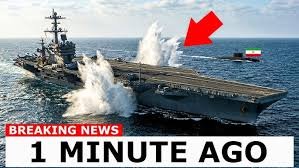
Dramatic hypothetical naval warfare scenario involving an Iranian submarine and the U.S. aircraft carrier USS Abraham Lincoln (CVN-72). While fictionalized, the scenario is used to explore modern naval tactics, submarine stealth capabilities, and the challenges faced by contemporary naval forces in high-stakes maritime environments.
Set in the strategically important Arabian Sea, the scenario imagines an Iranian Kilo-class submarine operating undetected for eleven days. The submarine allegedly takes advantage of advanced stealth features and careful planning to avoid discovery while maneuvering into a position beneath the American aircraft carrier. A key element of the story is the use of an “acoustic shadow,” a tactic in which the submarine hides behind a large commercial vessel, such as a supertanker, to mask its sound signature from enemy sonar systems. This allows it to move closer to its target while remaining concealed.
After reaching its firing position, the submarine launches two torpedoes in a coordinated attack. The first serves as a distraction, intended to draw defensive systems away from the primary threat. The second torpedo is portrayed as a more sophisticated weapon capable of reacquiring the carrier’s signature and adjusting its course toward a vulnerable point on the ship. The brief interval between launches creates a tense situation in which the carrier’s crew must react almost immediately to avoid disaster.
The scenario then shifts to the defensive response aboard the USS Abraham Lincoln. Personnel quickly activate anti-torpedo countermeasures and other defensive systems designed to detect, track, and neutralize incoming underwater threats. A naval aviator, identified as Lieutenant Commander James Porter, is already airborne and becomes part of the broader response effort. His rapid assessment of the threat and coordination with the ship’s crew highlight the importance of training, communication, and readiness during naval emergencies.
As the attack unfolds, the carrier’s defenses successfully intercept the first torpedo. The second continues toward the vessel, creating a final high-pressure moment. According to the scenario, advanced defensive technology and coordinated action ultimately prevent the torpedo from striking the ship. The carrier survives without significant damage, demonstrating the effectiveness of modern naval protection systems when combined with disciplined personnel and rapid decision-making.
Following the failed attack, U.S. forces locate and neutralize the submarine, ending the confrontation. The article uses this outcome to illustrate the constant contest between offensive and defensive technologies in modern warfare. It emphasizes that while stealth submarines can pose serious threats to large surface ships, aircraft carriers and naval task forces employ sophisticated detection systems, countermeasures, and coordinated tactics to defend against such dangers.
The broader message of the article focuses on lessons for military planners. It highlights the growing importance of undersea warfare, technological innovation, electronic detection systems, and realistic training. The scenario also reflects ongoing concerns about how future conflicts at sea could unfold, particularly in strategically sensitive regions where major powers and regional rivals operate in close proximity.
Ultimately, the hypothetical encounter serves as a thought experiment about the evolving nature of naval warfare. It underscores the continuing importance of preparedness, technological advancement, and adaptability as nations seek to protect their interests in increasingly complex and contested maritime environments.
