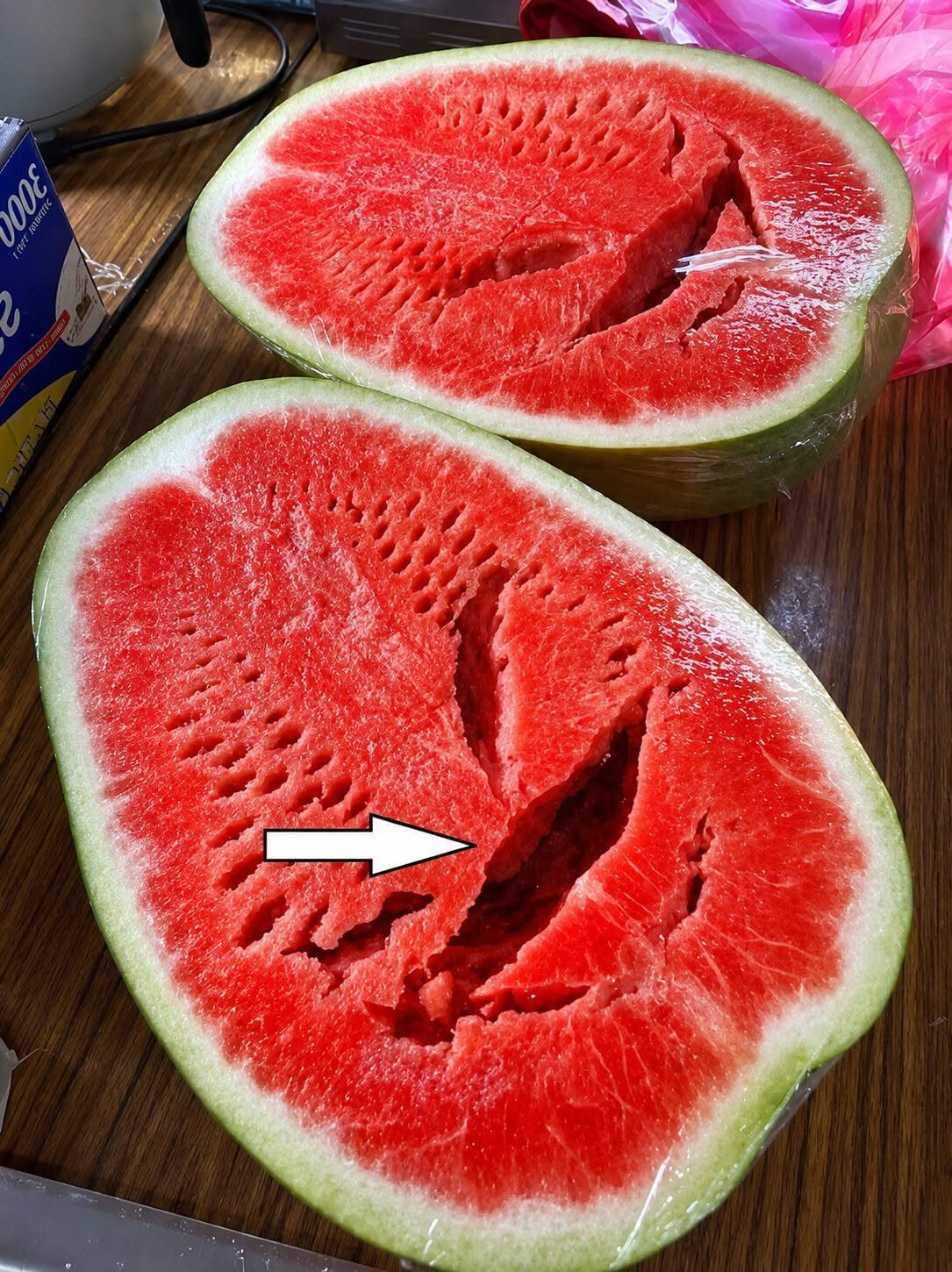
What causes it?
Hollow heart happens when the watermelon grows too fast and the inside flesh can’t keep up. The main triggers:
1. Irregular watering: Heavy rain or overwatering after a dry period makes the fruit swell quickly.
2. Pollination issues: If bees don’t pollinate every part of the flower evenly, some sections of the fruit develop faster than others, leaving gaps.
3. Temperature swings: Hot days + cool nights during growth stress the plant.
4. Variety: Some seedless and large varieties are more prone to it than small, round ones.
Think of it like bread rising too fast — cracks form because the structure expands unevenly.
Is it safe to eat?
Yes, 100%. Hollow heart doesn’t mean mold, rot, or pesticides. The white arrow in your image points to a natural split in the flesh. Taste and sweetness are usually normal, though texture might be a bit mealy around the cracks. If there’s no sour smell, mushy brown spots, or mold, just cut around the cracks and enjoy.
How to pick a watermelon less likely to have it:
1. Look for symmetry: Even shape = more even pollination.
2. Check the field spot: A creamy yellow spot means it ripened on the ground, not picked too early.
3. Thump test: A deep, hollow sound usually means ripe. A dull thud can mean overripe + more cracking.
4. Weight: It should feel heavy for its size — that’s water content, not cracks.
Fun fact: Farmers actually call it “heart” because the cracks often form a heart or star shape in the center. Some people even look for it as proof the melon is extra juicy.
So that “cracked heart” watermelon is just a melon that grew with enthusiasm. Still sweet, still hydrating, still perfect for summer.
