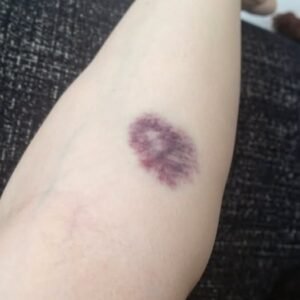
You wake up, stretch, and glance down at your arm—only to find a dark, pulsating purple stain blooming across your skin like a bruise from a nightmare. You don’t remember hitting anything. You haven’t fallen. Yet, there it is: a sinister, unexplained mark that feels like a red flag from your own body. Social media might tell you it’s a death sentence, a surefire sign of aggressive cancer, but the truth is far more complex and significantly more urgent. That discoloration could be a minor inconvenience, or it could be a desperate, final warning from your bloodstream. Don’t ignore it.
Bruising is a common phenomenon that most of us dismiss as the inevitable toll of daily life. We bump into doorframes, trip over gym equipment, or sustain minor impacts during our busy routines, usually forgetting the incidents moments after they occur. Typically, these marks are harmless, fading from a vibrant blue or deep purple to a soft yellow, then brown, before vanishing entirely as the body efficiently reabsorbs the leaked blood. However, when these marks appear spontaneously—without a clear cause, in clusters, or in unusually large, tender patches—they transcend the category of “everyday bumps.” They become a diagnostic clue, a signal from the body that something internal has compromised its ability to maintain vascular integrity
