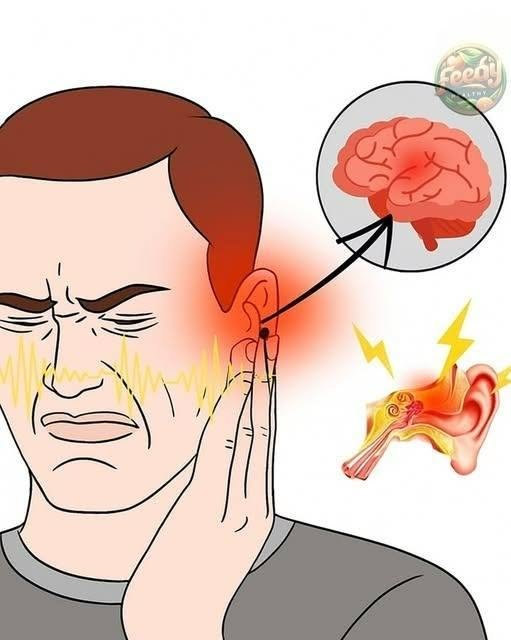
It started on a Tuesday. I was sitting at my desk, answering emails, when I noticed a faint high-pitched ring in my left ear. It wasn’t loud. It wasn’t painful. But it was there—a thin, persistent whine that seemed to come from nowhere.
I ignored it. Then it got louder. Then I started noticing it at night, when the house was quiet and there was nothing to distract me. I’d lie in bed, staring at the ceiling, listening to a sound that didn’t exist outside my own head.
For three weeks, I convinced myself it would go away. It didn’t. I made excuses: “It’s just allergies.” “I’ve been stressed.” “Maybe it’s my imagination.” Finally, my wife said, “Go to the doctor. Now.”
I did. And the first question the doctor asked changed everything: “Have you been to any loud concerts or worked with power tools without ear protection?”
I had. Months earlier. A single night at a rock concert, standing too close to the speakers, thinking earplugs were for “old people.”
That night was long gone. But the ringing wasn’t.
Tinnitus—the perception of sound when no external sound is present—affects an estimated 50 million Americans. For most, it’s a mild annoyance. But for millions more, it’s a constant companion that interferes with sleep, concentration, and quality of life.
Here’s what I wish I’d known before I heard that first ring. What tinnitus really means, what causes it, when it’s serious, and what you can actually do about it.
What Is Tinnitus? (Beyond “Ringing in the Ears”)
Tinnitus isn’t a disease. It’s a symptom. Like a fever or a cough, it’s your body telling you something else is going on.
Most people describe tinnitus as a ringing sound. But it can also sound like:
Buzzing
Hissing
Clicking
Whooshing (often related to blood flow)
Roaring
A high-pitched whine
A low-pitched hum
The sound can be constant or intermittent. It can be in one ear, both ears, or feel like it’s coming from the center of your head. It can be barely noticeable or loud enough to interfere with hearing real sounds.
Two main types of tinnitus:
Subjective tinnitus (95% of cases): Only you can hear the sound. It’s caused by issues in your auditory nerves, ear structures, or brain. This is the most common type.
Objective tinnitus (rare): A doctor can actually hear the sound when they listen with a stethoscope. This is usually caused by blood flow issues, muscle contractions, or middle ear bone conditions.
The vast majority of people with tinnitus have subjective tinnitus. The sound is real to you—but it’s generated by your own nervous system, not an external source.
What’s Actually Happening Inside Your Ear?
🔥 Continue Reading 👇 Next Page
To understand tinnitus, you need to understand a little about how hearing works.
Sound waves travel through your ear canal and vibrate your eardrum. Those vibrations pass through tiny bones in your middle ear to your cochlea—a fluid-filled, snail-shaped structure in your inner ear.
Inside your cochlea, thousands of tiny hair cells convert those vibrations into electrical signals. Those signals travel along your auditory nerve to your brain, which interprets them as sound.
Here’s where tinnitus comes in.
When those hair cells are damaged—by loud noise, aging, medications, or other causes—they can send random electrical signals to your brain even when no sound is present. Your brain, confused by these signals, interprets them as a ringing, buzzing, or hissing sound.
It’s like a broken guitar string. Even if you’re not playing it, it might still vibrate and make noise.
In other cases, your brain itself may be generating the sound. This happens when your auditory pathways are damaged, and your brain tries to compensate by turning up its internal “volume,” creating phantom noise.
The Most Common Causes of Tinnitus (What Triggered Yours?)
Here’s the frustrating truth: tinnitus has dozens of possible causes. Sometimes it’s one thing. Sometimes it’s a combination.
1. Noise-Induced Hearing Loss (The Most Common Cause)This is what happened to me. Loud noises—concerts, power tools, gunfire, heavy machinery, even loud headphones—damage the hair cells in your cochlea. Those cells don’t regenerate. Once they’re damaged, they’re damaged forever.
The science: Studies show that chronic noise exposure is the leading cause of tinnitus, accounting for up to 80% of cases. The damage is cumulative. One loud concert might not do permanent damage on its own. But years of lawn mowing, power tools, loud music, and traffic noise add up.
What you can do: Prevention is everything. Wear hearing protection (earplugs or earmuffs) in loud environments. Turn down the volume on your headphones. Give your ears quiet breaks.
2. Age-Related Hearing Loss (Presbycusis)
As you age, your cochlear hair cells naturally deteriorate. This usually starts around age 60. Tinnitus often accompanies this gradual hearing loss.
The science: Approximately one in three adults over 65 has some degree of hearing loss, and a significant percentage of those also experience tinnitus.
What you can do: Regular hearing tests. Hearing aids can help—by amplifying external sounds, they make the internal tinnitus less noticeable.
3. Earwax Blockage (The Easiest Fix)
Sometimes the answer is simple. A buildup of earwax can block your ear canal, change the pressure in your ear, and cause tinnitus.
The science: Earwax impaction is a surprisingly common cause of tinnitus. Removing the wax often resolves the ringing completely
🔥 Continue Reading 👇 Next Page
What you can do: See a doctor. Do not use cotton swabs (Q-tips) to dig at earwax—you’ll push it deeper and risk damaging your eardrum. Doctors have safe methods (irrigation, suction, or manual removal).
4. Medications (Ototoxicity)
Over 200 medications are known to be ototoxic—meaning they can damage the inner ear and cause tinnitus. In some cases, the tinnitus is temporary. In others, it’s permanent.
Common culprits:
High doses of aspirin (8-12 pills daily)
Nonsteroidal anti-inflammatory drugs (NSAIDs like ibuprofen, naproxen)
Certain antibiotics (gentamicin, neomycin, erythromycin)
Loop diuretics (furosemide, bumetanide)
Chemotherapy drugs (cisplatin, carboplatin)
Quinine (used for malaria, also in tonic water)
What you can do: If you notice tinnitus after starting a new medication, ask your doctor about alternatives. Never stop a prescribed medication without medical guidance.
5. Meniere’s Disease
This inner ear disorder causes episodes of vertigo (dizziness), hearing loss, and tinnitus—often described as a roaring or whooshing sound.
The science: Meniere’s is caused by fluid buildup in the labyrinth of your inner ear. It’s relatively rare (about 0.2% of the population). Tinnitus in Meniere’s often comes and goes with vertigo episodes.
What you can do: See an ENT specialist. Meniere’s is manageable with dietary changes (low salt), medications, and in severe cases, surgery.
6. Temporomandibular Joint (TMJ) Disorders
Your jaw joint sits right next to your ear. Problems with TMJ—teeth grinding, misaligned bite, jaw clenching—can cause tinnitus.
The science: TMJ disorders can affect the muscles, ligaments, and bones around your ear, leading to tinnitus. Treating the TMJ often resolves the tinnitus.
What you can do: See a dentist or TMJ specialist. Treatment may include night guards, physical therapy, or bite adjustments.
7. Head or Neck Injuries
🔥 Continue Reading 👇 Next Page
Trauma to your head or neck can damage your auditory nerves, inner ear structures, or the parts of your brain that process sound.
The science: Whiplash, concussions, and other head injuries can cause unilateral tinnitus (ringing in one ear). The risk is higher if the injury affected your hearing, caused dizziness, or resulted in a skull fracture.
What you can do: If tinnitus starts after a head injury, see a doctor immediately. You may need imaging (CT or MRI) to rule out serious damage.
8. Vascular Conditions (Pulsatile Tinnitus)
This is when your tinnitus sounds like a rhythmic whoosh—in time with your heartbeat. It’s called pulsatile tinnitus.
Possible causes:
High blood pressure
Atherosclerosis (hardened arteries)
Blood vessel malformations
Tumors near blood vessels
Anemia (low red blood cells)
What you can do: Pulsatile tinnitus is less common but more likely to have a treatable medical cause. See a doctor, especially if the sound is constant or bothersome.
9. Other Medical Conditions
Tinnitus has been linked to:
Anemia and iron deficiency
Thyroid disease (especially hypothyroidism)
Diabetes (high blood sugar can damage blood vessels and nerves)
Multiple sclerosis (can affect auditory nerve pathways)
Lyme disease
Acoustic neuroma (benign tumor on the auditory nerve—very rare but serious)
When Is Tinnitus Serious? (Red Flags to Watch For)
This is the most important section. Most tinnitus is annoying but harmless. However, certain symptoms mean you need to see a doctor—soon.
See a doctor immediately if tinnitus is accompanied by:
Sudden hearing loss (wake up unable to hear in one ear)
Dizziness or vertigo (room-spinning sensation)
Nausea or vomiting (especially with dizziness)
Weakness or numbness on one side of your face or body
Double vision or other vision changes
Severe headache (especially if new or different from your usual headaches)
Ear pain or drainage (signs of infection)
