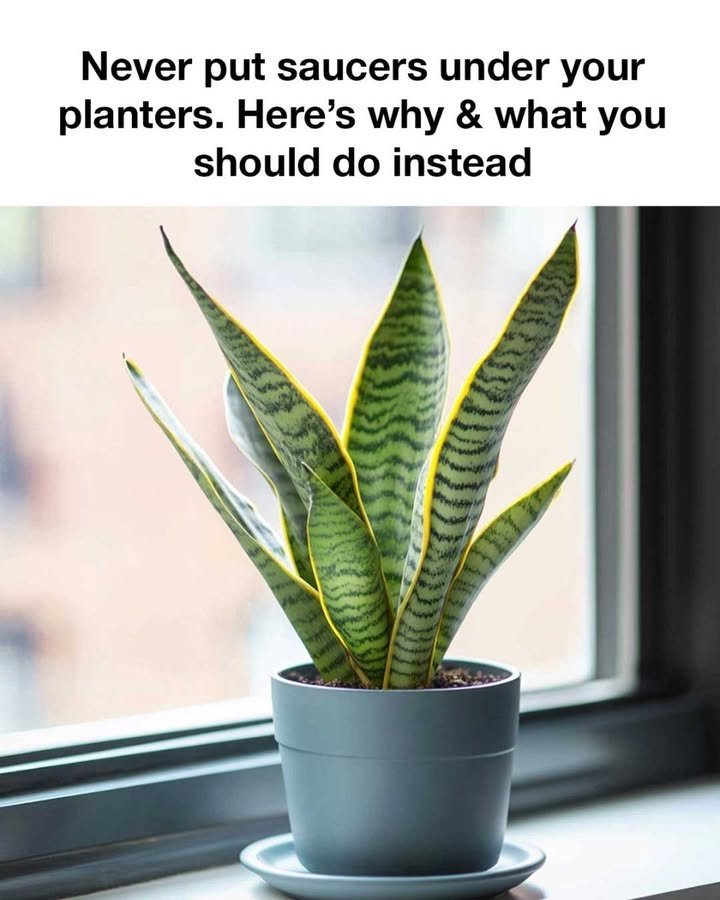

That little dish under your potted plant seems like a simple solution for a messy problem. But that same saucer, if misused, can be the very thing that harms your plant. The key isn’t to ban saucers entirely, but to understand their risks and use them correctly.
Let’s clear the water on best practices for plant saucers.
-
The #1 Killer: Root Rot
When excess water sits in a saucer, the soil at the bottom of the pot can’t dry out. This creates a waterlogged environment where roots suffocate and rot, a condition that is often fatal. -
A Pest Motel
Standing water is a prime breeding ground for fungus gnats and mosquitoes. It also encourages mold and mildew, which can harm your plant and your home’s air quality. -
Restricted Airflow
A sealed saucer can limit air circulation to the root zone, which is crucial for healthy root function and for the soil to dry evenly.
✅ How to Use a Saucer Correctly (The Golden Rule)
The Golden Rule: A saucer is for catching water temporarily, not for storing it.
Here’s the right way to do it:
-
Water Thoroughly: Water your plant until water flows freely out of the drainage holes.
-
Let it Catch: Allow the water to fill the sauncher.
-
The Crucial Step: After 15-30 minutes, empty the saucer completely. This gives the plant enough time to absorb any remaining moisture from the bottom without letting it sit in water.
