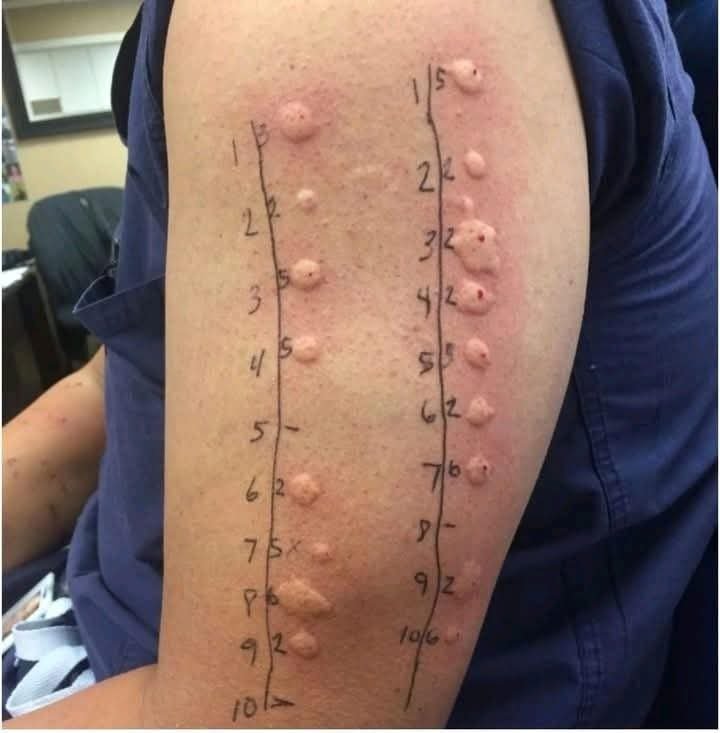
A skin prick test is a simple, quick method doctors use to check for allergic sensitivities. Small amounts of common allergens (like pollen, dust, or foods) are placed on the skin, usually on the forearm or back. The skin is then lightly pricked or scratched through each allergen drop so a tiny amount enters the skin’s surface.
In the photo, two vertical rows of numbered bumps (wheels) appear on a person’s upper arm. The numbers written next to each bump identify which allergen was applied at that spot. The raised, pinkish bumps are the body’s reaction to the allergens, indicating an allergic response. The size of the bump helps clinicians gauge the severity of the sensitivity.
How the Test Is Performed1. Preparation: The skin is cleaned, and a grid or numbers are drawn to mark test locations.
2. Application: A small drop of each allergen extract is placed on the skin at the marked spots.
3. Prick: A sterile lancet pricks the skin through the drop, allowing the allergen to enter the epidermis.
4. Reading: After 15–20 minutes, the skin reactions are measured. A positive reaction is a raised wheel with surrounding redness.
What the Results Mean- A positive reaction (visible bump) shows the immune system reacts to that substance, suggesting an allergy.
– A negative reaction (no bump) indicates likely no allergy to that substance.
– Results are interpreted by a healthcare professional who considers the patient’s medical history.
After the TestThe test site may stay red or itchy for a few hours. Doctors usually advise avoiding scratching and applying antihistamines if needed. Severe reactions are rare but can require immediate medical attention.
Do you want more details on interpreting skin prick test results or tips for preparing for one?
