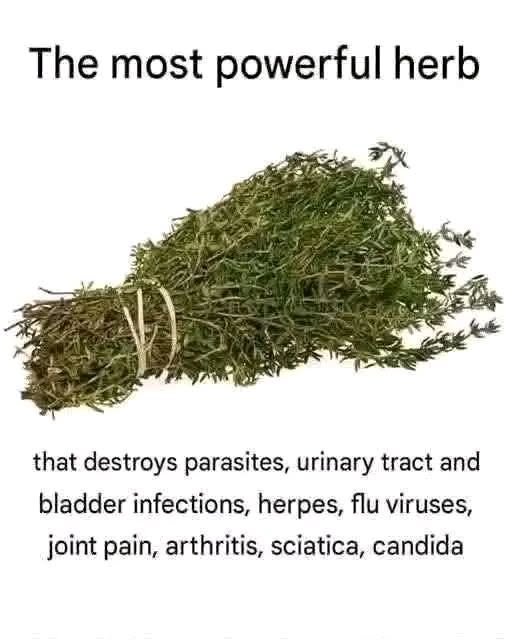
A popular social‑media post is circulating a picture of a dried herb tied in a bunch, touted as the ultimate remedy for a laundry list of ailments: parasites, urinary‑tract infections, herpes, flu viruses, joint pain, arthritis, sciatica, and candida. The herb in the photo appears to be a common culinary or medicinal plant such as rosemary or thyme, but the exact species isn’t identified.
Scientific evidence does not support the claim that any single herb can treat all these conditions. While many herbs have documented antimicrobial or anti‑inflammatory properties (e.g., rosemary’s antioxidant effects or thyme’s essential oils), using an herb as a cure‑all can be misleading and potentially risky. Some health issues listed require medical diagnosis and specific treatments; self‑treating with unverified herbal remedies may delay proper care or cause interactions with medications.
If you’re interested in herbal medicine, it’s advisable to:
1. Identify the herb correctly (botanical name, part used).
2. Consult credible sources or a qualified herbalist/physician about proven uses and safe dosages.
3. Seek professional medical advice for serious infections or chronic conditions like herpes, arthritis, or candida, rather than relying solely on unproven remedies.
Bottom line: the “most powerful herb” hype is more marketing than science. Approach such claims with skepticism and prioritize evidence‑based health choices.
Want to know which specific herb is in the picture and its verified medicinal uses? 🍃👀
