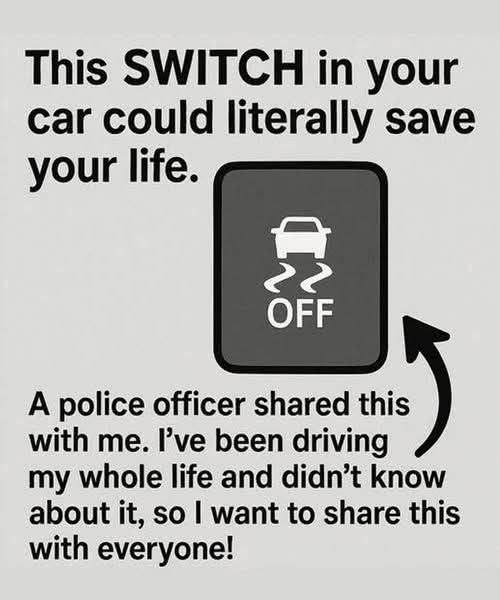
You’ve probably seen that little black button with a car icon and the word “OFF” tucked somewhere on your dashboard, and you might have wondered what it actually does. A police officer recently shared a tip about this switch, warning that ignoring it could literally put your life at risk. Here’s everything you need to know about the traction control system (TCS) and why that simple button matters.
What is traction control?Traction control is an electronic safety feature built into most modern vehicles. Its job is to prevent the wheels from losing grip on the road, especially during acceleration on slippery or uneven surfaces. When the system detects a wheel spinning excessively, it automatically reduces engine power or applies brake pressure to that wheel, helping the car stay stable and on course.
The “OFF” switch explainedThe button you see turns the traction control system off. When you press it, the TCS stops intervening, allowing the wheels to spin freely. This can be useful in specific situations, such as:
– Getting stuck in snow or mud: Disabling TCS lets the wheels spin more freely, which can help you rock the car out of a stuck position.
– Performance driving: Some drivers turn it off on a track to allow full wheel spin for better acceleration.
However, leaving it off on normal road conditions removes a critical safety layer, increasing the risk of losing control, especially on wet or icy roads.
Why it could save your lifeDriving with traction control disabled on regular streets means you lose automatic protection against skidding or slipping. In an emergency braking or sudden turn situation, the car may behave unpredictably, raising the chance of an accident. Keeping the system on (the default setting) gives you an extra safety net that can prevent crashes and protect you and your passengers.
Best practice for everyday driving1. Keep TCS on for normal road use.
2. Turn it off only when you know you need it (e.g., stuck in mud) and turn it back on immediately after.
3. Check your vehicle’s manual for specific instructions, as some cars automatically reactivate TCS under certain conditions.
Bottom lineThat unassuming “OFF” button is more than a quirky feature—it’s a life‑saving safety tool. Understanding when to use (or not use) your car’s traction control can make a huge difference in preventing accidents and staying safe on the road.
Want to know how traction control interacts with other safety systems like ABS or ESP in your specific car model?
