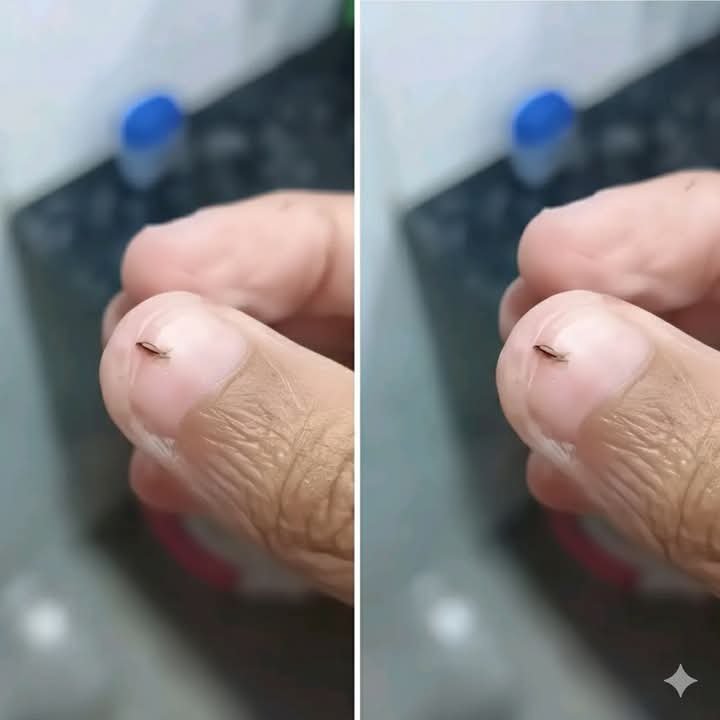
The two‑panel photo shows a thumb holding a tiny tick that has embedded itself in the skin near the nail. The left image captures the tick clearly, while the right image shows the same spot after the tick has been removed, leaving a small wound.
What’s happening in the picture?1. Identification: The brown speck is a tick, a small arachnid that feeds on blood. Ticks can attach to any exposed skin and are often found on fingers, hands, or feet.
2. Removal: The right photo indicates the tick has been pulled out, which is the standard first‑aid step. Proper removal involves grasping the tick close to the skin with fine tweezers and pulling straight out with steady pressure.
3. Aftercare: The remaining tiny opening is a puncture wound left by the tick’s mouthparts. Cleaning the area with soap and water and applying an antiseptic helps prevent infection.
Why ticks matterTicks can transmit diseases such as Lyme disease or tick‑borne encephalitis, depending on the region and tick species. Prompt, careful removal reduces the risk of infection.
Quick tips for handling a tick bite- Use fine‑point tweezers to grab the tick as close to the skin as possible.
– Pull upward with steady, even pressure; avoid twisting or jerking.
– Clean the bite site and apply an antiseptic.
– Monitor the area for rash, fever, or swelling, and seek medical help if symptoms appear.
When to seek medical advice- If the tick was attached for more than 24 hours.
– If part of the tick remains in the skin.
– If you develop a fever, rash, or joint pain after the bite.
