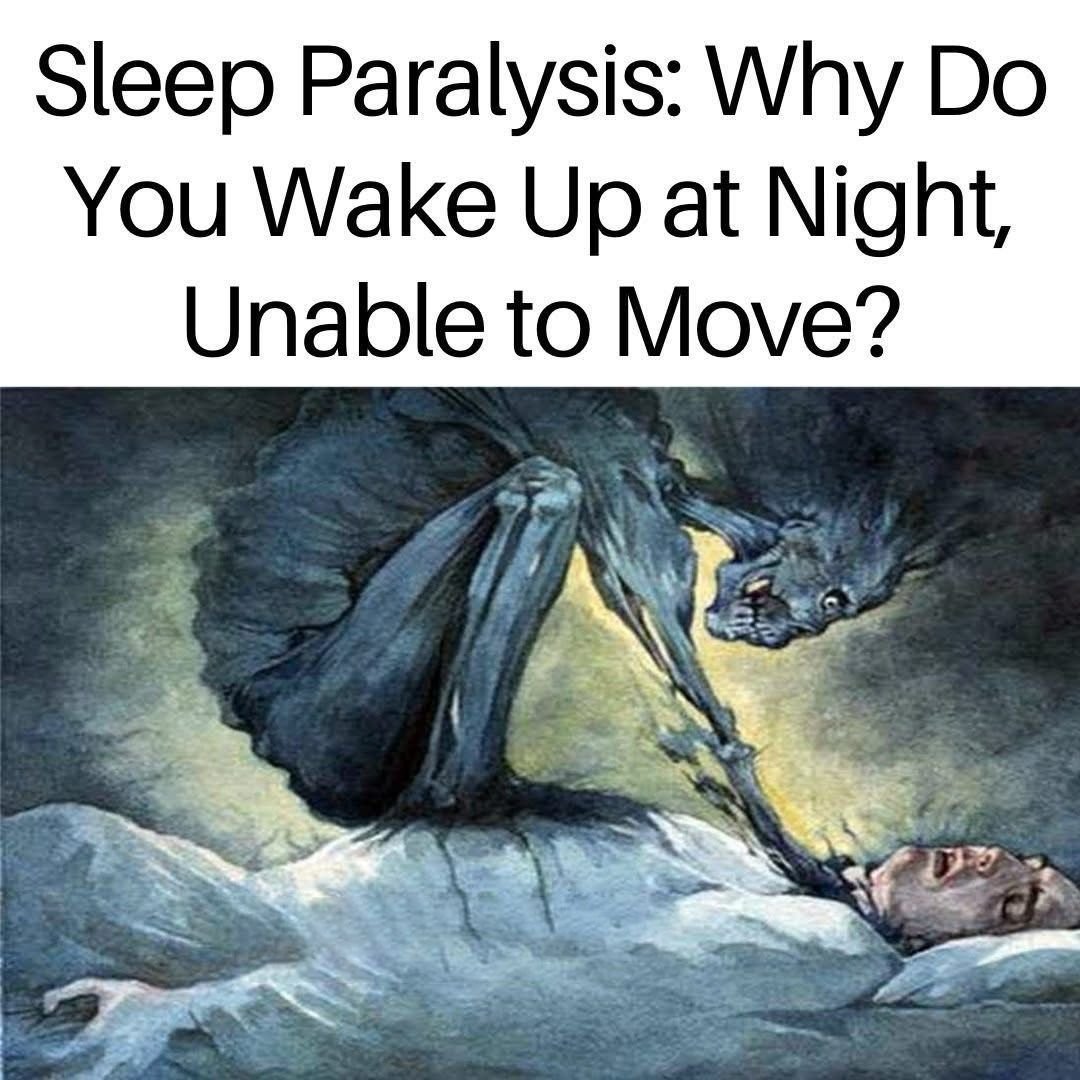
*The Terrifying Reality of Sleep Paralysis: Why Do You Wake Up Unable to Move?*

Have you ever woken up in the middle of the night, fully conscious and aware of your surroundings, but completely paralyzed? You’re not alone. Sleep paralysis is a mysterious and terrifying phenomenon that affects millions of people worldwide. In this article, we’ll explore the causes, symptoms, and treatment options for sleep paralysis.
*What is Sleep Paralysis?*
Sleep paralysis is a condition that occurs when you’re falling asleep (hypnagogic) or waking up (hypnopompic). During this time, you’re unable to move or speak, despite being conscious and aware of your surroundings. It’s like your body is frozen, but your brain is wide awake.
[Image: A person lying in bed, with a ghostly figure looming over them]
*Causes of Sleep Paralysis*
1. *Sleep Stage:* Sleep paralysis often occurs during REM sleep, when your brain is active and dreams happen. Your body is paralyzed to prevent acting out dreams, but sometimes this paralysis lingers when you wake up.
2. *Sleep Deprivation:* Lack of sleep, irregular sleep schedules, or sleep disorders like narcolepsy can trigger sleep paralysis.
3. *Genetics:* Family history might play a role.
4. *Stress and Anxiety:* High levels of stress and anxiety can increase the risk.
5. *Other Factors:* Sleep disorders, certain medications, or substance abuse can also contribute.
[Image: A person sleeping, with a clock in the background showing an irregular sleep schedule]
*Symptoms of Sleep Paralysis*
– Inability to move or speak
– Fear or anxiety
– Hallucinations (visual or auditory)
– Shortness of breath
– Pressure on the chest or feeling of weight
[Image: A person trying to scream, but with a speech bubble crossed out]
*Treatment Options*
1. *Establish a Sleep Schedule:* Regular sleep hours can help.
2. *Improve Sleep Quality:* Create a relaxing bedtime routine, avoid caffeine and electronics before bed.
3. *Manage Stress:* Practice relaxation techniques like meditation, deep breathing, or yoga.
4. *Get Enough Sleep:* Aim for 7-9 hours of sleep each night.
[Image: A person meditating in bed, with a peaceful atmosphere]
*Conclusion*
Sleep paralysis is a mysterious and terrifying phenomenon, but it’s not a sign of a serious medical condition. By understanding the causes and symptoms, you can take steps to prevent and manage sleep paralysis. If you’re experiencing frequent or severe sleep paralysis, consider talking to a healthcare professional for guidance.
[Image: A person sleeping peacefully, with a calm and serene atmosphere]
*Sources:*
– National Sleep Foundation
– American Academy of Sleep Medicine
– Mayo Clinic
*Share Your Experience:*
Have you ever experienced sleep paralysis? Share your story in the comments below.
