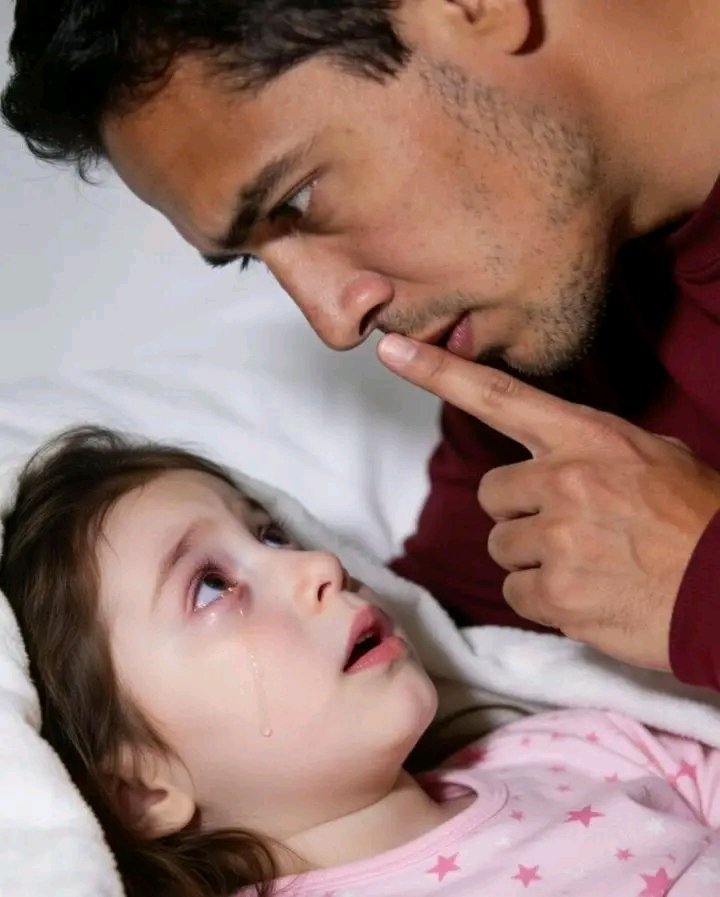
This visual represents a critical intersection of power dynamics, fear, and the psychological concept of “the secret.” Below is an exploration of the themes surrounding this imagery and the importance of breaking such silences.
The Anatomy of Coerced Silence
In many instances of interpersonal harm, the perpetrator relies on a “shushing” mechanism—not just through physical gestures, but through psychological manipulation. This is often achieved by:
Exploiting Trust: Leveraging the victim’s love or dependence on the figure to ensure they don’t speak out.
Fear of Consequences: Implying that telling the truth will lead to trouble for the child, the perpetrator, or the entire family.
Isolation: Making the victim feel as though they are the only ones experiencing this, and that no one will believe them if they speak.
The Psychological Impact on the Child
When a child is forced to keep a secret out of fear, it creates a state of chronic hypervigilance. The brain remains in a constant “fight, flight, or freeze” mode. Over time, this can lead to:
Internalized Guilt: The child may feel responsible for the “secret,” leading to a fractured sense of self-worth.
Difficulty with Boundaries: Learning that their personal space and voice can be overridden by authority figures.
Traumatic Bonding: A complex emotional attachment where the child feels a need to protect the person causing them harm.
Breaking the Cycle: Empowerment Through Voice
The most effective way to combat the dynamics shown in this image is to foster an environment where “secrets” are replaced by open communication.
Teaching “Body Safety”
Education is the strongest defense. Caregivers and educators are encouraged to teach children the difference between a surprise (which is temporary and fun) and a secret (which feels heavy, scary, or “bad” in the tummy).
Creating Safe Spaces
Children need to know that there is at least one “Safe Adult” they can talk to without fear of judgment or retaliation. This involves:
Listening without interrupting.
Validating their feelings immediately.
Reassuring them that they are not in trouble for telling the truth.
Resources for Help
If you or someone you know is in a situation that mirrors the distress shown in this image, there are professional organizations dedicated to providing help and protection:
