5 Silent Warnings Your Body May Give Months Before a Heart Attack

Your body may warn you MONTHS before a heart attack — but most people ignore these signs 5 Silent Warnings Your Body May Give Months Before a Heart Attack Many people believe heart attacks happen suddenly without warning, but doctors say the body often sends subtle signals weeks or even months before a serious cardiac event occurs. The problem is that these symptoms are often ignored because they seem mild, unrelated, or easy to blame on stress, aging, or lack of sleep. Health experts warn that recognizing these early signs could help people seek medical attention sooner and potentially prevent life-threatening complications. 1. Unusual Fatigue One of the most common early warning signs is extreme fatigue that feels different from normal tiredness. Many people report feeling exhausted even after resting or sleeping well. Doctors explain that reduced blood flow forces the heart to work harder, which can leave the body feeling drained. Research has found that unusual fatigue is especially common in women before a heart attack. 2. Shortness of Breath Difficulty breathing during simple daily activities may also be an early sign that the heart is struggling. Some people experience breathlessness while walking, climbing stairs, or even resting. Experts say this may happen because the heart cannot pump blood efficiently, causing fluid buildup and reduced oxygen circulation. 3. Sleep Problems Doctors say disrupted sleep is another warning sign many people overlook. Some individuals experience insomnia, sudden waking during the night, anxiety, or difficulty staying asleep in the weeks leading up to a heart attack. Researchers believe stress hormones, circulation changes, and heart strain may contribute to these sleep disturbances. 4. Chest Discomfort or Pressure Although severe chest pain is the most recognized symptom of a heart attack, experts say early chest discomfort may appear much more subtly. People may feel pressure, tightness, burning, heaviness, or mild discomfort in the chest that comes and goes. The sensation may spread to the arms, jaw, neck, back, or stomach. 5. Dizziness, Nausea, or Cold Sweats Feeling lightheaded, nauseous, dizzy, or suddenly breaking into cold sweats can also signal heart trouble. Doctors warn that these symptoms are often mistaken for stress, low blood sugar, digestive issues, or exhaustion, causing many people to delay seeking help. Experts Warn Not to Ignore These Signs Cardiologists emphasize that symptoms may appear differently in men and women. Women are more likely to experience fatigue, nausea, sleep problems, dizziness, and shortness of breath instead of dramatic chest pain. Doctors say people should seek medical attention immediately if symptoms become severe, sudden, or persistent. Health experts also recommend reducing heart attack risk by: Exercising regularly Avoiding smoking Managing stress Controlling blood pressure and cholesterol Maintaining a healthy diet Getting regular health screenings Many heart attacks may seem sudden, but in reality, the body often whispers warnings long before it scream  

How to Fix Bleach Stains on Colored Clothes …Without Throwing Them Away….

    Bleach stains can feel like a disaster. One small accident—mixing laundry, a splash while cleaning—and suddenly your favorite colored item is marked with a pale, uneven patch. Here’s the truth most people don’t realize: bleach doesn’t stain fabric—it removes the color. That means you’re not lifting a mark… you’re dealing with lost dye. So while you can’t always fully “erase” the damage, there are a couple of smart ways to neutralize the bleach and improve the appearance—sometimes surprisingly well. First: Act Quickly If the Stain Is Fresh If the bleach exposure just happened, your priority is to stop the chemical reaction. Rinse the area immediately with cold water to prevent further color loss. Method 1: Neutralize Bleach with Sodium Thiosulfate This is the most effective option if you can get the ingredient. What you need: Water Steps: Mix about 250 ml of room-temperature water with 1 tablespoon of sodium thiosulfate Stir until fully dissolved Pour directly onto the affected area Let it sit for a few minutes Rinse with cold water and wash normally Why it works: Sodium thiosulfate neutralizes leftover bleach, preventing further damage and sometimes softening the appearance of the stain. Method 2: Alcohol + Vinegar Blend This is a more accessible home remedy. What you need: rubbing alcohol white vinegar Steps: Mix equal parts alcohol and white vinegar Dampen a clean cloth with the solution Gently dab the stained area (don’t rub) Rinse with cold water Repeat if needed What it does: This method can help redistribute surrounding dye slightly, making the bleach spot less noticeable. Important Reality Check Let’s be honest—these methods can improve the look, but they won’t always restore the original color completely. If the stain is older or more severe, your best options might be: Using a fabric dye to recolor the garment Turning the item into a patterned or tie-dye piece Repurposing it (home wear, cleaning cloths, etc.) Safety Tips Bleach is a strong chemical, so always: Work in a well-ventilated area Avoid mixing random cleaning products Wear gloves if you have sensitive skin The Takeaway Bleach stains aren’t always the end of your clothes. With the right approach, you can often reduce the damage or make it far less visible. The key is understanding what happened—and responding the right way instead of giving up on the garment too quickly. Sometimes, a “ruined” piece just needs a second chance (and a little chemistry).

The Secret of Our Hand to Show RICH or POOR….See More>

Palmistry, also known as chiromancy, is the ancient art of interpreting the lines, shapes, and features of the hand to gain insight into a person’s character, life path, or potential destiny. Practiced for thousands of years in cultures ranging from India and China to Greece and Persia, palmistry continues to intrigue people around the world. One popular belief in palmistry is that certain lines or markings can indicate a person’s financial fortune—whether they’re likely to become wealthy or remain in modest means. While this idea is more symbolic than scientific, it has deep roots in folk wisdom and cultural traditions. 📸 Visual Symbolism: “Poor” vs. “Rich” Palms In some depictions (such as the image described), different crossed line patterns near the thumb are shown with contrasting labels: “Poor” Hand: A light or shallow cross near the base of the thumb suggests limited financial fortune or challenges in wealth accumulation. “Rich” Hand: A deeper, more pronounced cross in the same area is said to indicate financial success, prosperity, or a strong potential for wealth. 🔍 These interpretations are not universally agreed upon, but they reflect a symbolic reading—connecting the visible lines on a person’s palm to deeper meanings about their life or character. 🌍 Cultural Significance of Palm Lines Throughout history, palmistry has held unique importance in different cultures: In Indian Vedic palmistry, lines are linked to planetary influences and karma. In Chinese palmistry, the hand is read in relation to yin-yang balance and traditional Chinese medicine. In Western traditions, palm readers often focus on major lines—like the heart line, head line, life line, and fate line—to determine personality traits and life outcomes. The idea that certain markings—like crosses, stars, or islands—can influence one’s wealth, luck, or destiny is a recurring theme in many of these systems. From a scientific standpoint, palmistry is not supported by empirical evidence. There is no verified link between palm lines and a person’s financial status, intelligence, or future. As a result, many experts classify palmistry as a form of pseudoscience. However, this doesn’t stop people from finding value in it. In modern times, palmistry is often viewed as: A fun or symbolic practice for self-reflection A tool in psychological or spiritual guidance A way to explore cultural heritage and tradition Much like astrology or tarot, palmistry can serve as a conversation starter, a source of comfort, or a means of personal insight, even if it doesn’t hold scientific validity. 🧠 Final Thoughts: A Handful of Meaning Whether you see palmistry as a mystical guide, an entertaining curiosity, or a window into cultural beliefs, there’s no denying its enduring fascination. The idea that the story of your life—or your fortune—could be written on your hand is both poetic and powerful. Just remember: while lines may guide, your choices shape your future. ✨ In the end, perhaps the richest hands are those used to build, give, and create. 🧪 Modern Perspective: Art or Pseudoscience?

Women’s who have a…See more…..

  Women’s who have a vag…See more Why does my girlfriend like shaving her pubic hair and armpits? Because that’s how she prefers to maintain her body hair. Some women like it, some women don’t. Personally, I remove my armpit hair because I like to wear tank tops and other sleeveless fashions and I think armpit hair is unattractive. It’s all about looks. I remove my pubic hair because I found I prefer the increased sensitivity it gives me when it comes to sexual activities. It’s all about feel. I have to admit I was startled at my prepubescent “little girl” appearance the first time I looked in the mirror after shaving it off but that was years ago and I’ve gotten used to it. In this day and age, it seems to me it’s become more the norm than having pubic hair. I do think an unruly bush is very unattractive and nobody wants to see your pubes peeking out around your bikini. IMO, it should be nicely trimmed to at least a half-inch or less. So it’s about looks too. Shaving the pubic area and armpits is a personal grooming choice with no inherent meaning. It’s a cosmetic preference, and women shave for various reasons, including hygiene, comfort, and aesthetics.  Here’s a more detailed explanation: Personal Hygiene: Some women find that shaving makes them feel cleaner, as it eliminates hair that can trap odors or sweat.  Comfort: Shaving can be a matter of comfort, as some women find the feeling of smooth skin more comfortable, especially during activities like swimming or wearing certain clothing.  Aesthetics: Shaving is a common beauty practice, and many women choose to shave to achieve a desired look, often influenced by cultural norms and media portrayals.  Sexual Attraction: Some women may shave to feel more attractive or to meet the perceived preferences of their partners.  No inherent meaning: It’s important to remember that there is no single meaning to shaving one’s pubic area or armpits. It’s a personal choice with no inherent connection to cleanliness, sexual availability, or any other specific characteristic.  Ultimately, whether or not a woman chooses to shave is a personal decision with no universally accepted meaning.

If your partner always … See more>>>

If Your Partner Always Asks About You Behind Your Back, It’s Because… Trust and communication are the foundation of any healthy relationship. However, when you discover that your partner frequently asks about you behind your back, it can leave you feeling confused or even suspicious. Why would someone you trust feel the need to inquire about you through others instead of asking you directly? While this behavior can stem from various reasons, understanding the underlying causes can help you address any potential issues in your relationship. 1. They Are Insecure or Anxious Some partners may constantly seek reassurance about their relationship because of personal insecurities. If they have a history of abandonment or betrayal, they might fear losing you and look for external validation. Asking about you through friends or family could be their way of ensuring that everything is still okay between you two. 2. They Doubt Your Honesty If your partner repeatedly questions others about you, it could indicate a lack of trust. They might feel that you are not being entirely truthful with them or that you are hiding something. This kind of behavior is often seen in relationships where past betrayals have occurred, leading to ongoing suspicion and doubt. 3. They Want to Surprise You Not all behind-the-back inquiries are negative. Sometimes, a partner may ask about your likes, dislikes, or schedule to plan a special surprise for you. They might be trying to buy the perfect gift, plan a romantic getaway, or prepare a meaningful gesture that requires discretion. 4. They Feel Disconnected A partner who constantly seeks information about you through others may feel distant from you. They might believe they are not receiving enough attention, emotional connection, or quality time together. Instead of expressing their concerns directly, they resort to gathering details from external sources. 5. They Have Controlling Tendencies In some cases, a partner’s excessive questioning about you could be a sign of control issues. They might want to monitor your activities, interactions, and decisions without directly confronting you. If their behavior makes you feel suffocated or manipulated, it may be a red flag indicating deeper problems in the relationship. How to Address the Issue If you notice that your partner frequently asks about you behind your back, have an open and honest conversation. Express your concerns and ask them why they feel the need to seek information elsewhere. Strengthening communication and building mutual trust can help resolve misunderstandings and improve the relationship. At the end of the day, transparency and respect are key to maintaining a strong, healthy partnership.

Article Draft: “Understanding and Preventing Crotch Stains in Underwear”

Crotch stains on underwear, like the ones shown in the black briefs, are a common issue many people face. These stains are usually caused by a combination of sweat, body oils, and residue from fabric or personal care products. In some cases, the use of certain deodorant or antiperspirant products (such as the white beads seen in the image) can contribute to staining when the ingredients interact with fabric or sweat. Causes of Crotch Stains 1. Sweat & Moisture: The groin area naturally produces sweat, which can leave yellowish or dark marks on fabric over time. 2. Product Residue: Some antiperspirant or deodorant beads contain ingredients that can leave deposits or react with sweat, leading to stains. 3. Fabric Type: Synthetic materials may trap moisture and residues more than natural fibers, worsening stains. Prevention Tips – Choose breathable fabrics like cotton for underwear to reduce moisture buildup. – Apply antiperspirant or deodorant sparingly and allow it to dry before dressing. – Wash underwear promptly after wearing, using an enzyme-based detergent to break down organic residues. – Consider using fabric protectors or stain-prevention sprays designed for intimate apparel. Removal Methods – Pre-treat stains with a mixture of baking soda and water or a commercial stain remover before washing. – Use hot water and a strong detergent for synthetic fabrics, or cold water for delicate materials. – For persistent stains, soak the garment in oxygen bleach solution (safe for fabric type) before laundering.

News The Music Never Stops, Why the Sudden Passing of Grateful Dead…..

The Music Lives On: Why Reports About Bob Weir Have Sparked Global Reaction In the world of classic rock, few figures carry the same enduring presence as Bob Weir—the rhythm guitarist whose playing helped shape Grateful Dead into something far beyond a typical band. In recent hours, online reports claiming he has passed away at 78 have spread rapidly, prompting an immediate wave of emotion, memories, and tributes from fans around the world.     Even so, the reaction itself says a lot. For many, Bob Weir is not just associated with songs, but with an entire culture built around music, connection, and shared experience.     A Core Part of Rock History Bob Weir emerged from the California counterculture of the 1960s as a founding member of the Grateful Dead—a band that never fit into one defined genre. Their sound moved freely between psychedelic rock, folk, blues, and improvisational styles more often associated with jazz.   While lead guitar often attracts the most attention, Weir’s role was fundamental. His rhythm playing wasn’t static—it shifted, adapted, and created space. It allowed the band’s long, unpredictable jams to stay grounded while still feeling open and fluid. In many ways, he held the structure together while everything else stretched outward.     Why Fans Feel It So Deeply For generations of “Deadheads,” Bob Weir became more than a musician. His presence was tied to memories—road trips, live shows, late-night listening sessions. The Grateful Dead didn’t rely on repeating the same performance. Each show was different, shaped by the moment.     Weir embraced that unpredictability. Concerts felt less like performances and more like conversations, where the audience played a role simply by being there.     A Career That Kept Evolving After the original era of the Grateful Dead, Weir never stopped creating. Projects like RatDog, Wolf Bros, and later Dead & Company kept the music alive while introducing it to new generations.   He remained deeply engaged with his craft—experimenting with tone, refining his sound, and continuing to perform with a presence shaped by decades of experience. His voice, too, became part of the band’s identity, carrying a raw and grounded quality that fans instantly recognize.     Why the Tribute Wave Feels So Strong The response—whether from longtime fans, younger listeners, or fellow musicians—comes down to influence. Bob Weir helped shape a model of music that wasn’t dependent on chart success. Instead, it was built on live performance, loyal audiences, and a shared culture.   The Grateful Dead’s openness to recording and sharing concerts also played a major role. Allowing fans to tape and exchange live shows helped create a community long before the internet made that kind of sharing common.   More Than Just Music Weir’s impact extended beyond the stage. Over the years, he supported environmental and social causes, encouraging people to stay engaged not only with music, but with the world around them.   That combination—art, community, and responsibility—became part of his broader legacy.     A Legacy That Continues Regardless of Headlines Whether these reports are confirmed or not, one thing remains unchanged: the music itself continues. Through recordings, live archives, and the countless artists influenced by this approach, the sound doesn’t disappear.   It evolves. That idea—music as something living, something that moves from one generation to the next—is at the heart of what Bob Weir helped build.     And that’s why reactions like this go beyond news. They reflect connection, memory, and a shared cultural space that doesn’t depend on any single moment. What’s the one Grateful Dead or Bob Weir performance that stayed with you the most?

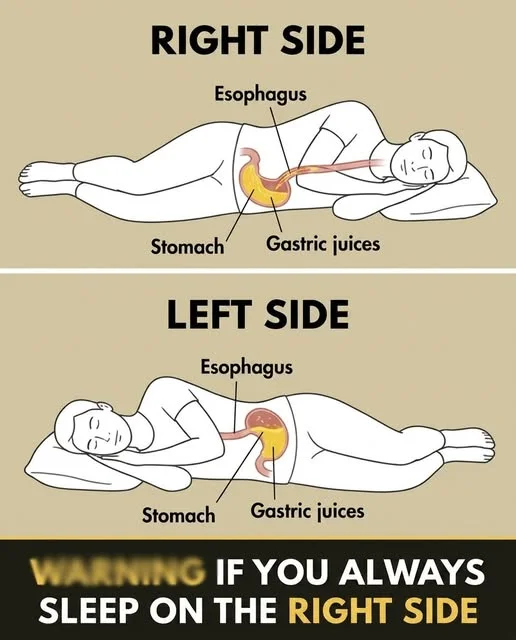
What risks do you run when you sleep on your right side?

We often hear that sleeping on the left or right side is better, but rarely understand why. In reality, your sleeping position can influence both comfort and overall well-being. Here’s a simple explanation to help you understand. You’ve probably been told that one side is better than the other, yet the reasons are often unclear. With so many opinions—advice from family, common myths, and even conflicting information—it can be confusing to know what truly works. Still, the way you sleep can affect how rested you feel and how comfortable your nights are. Before changing your habits, it’s worth understanding the basics in a simple way. Sleeping on Your Left Side: How It May Affect Comfort Sleeping on your left side is frequently mentioned when discussing sleep quality and comfort. Many people find this position helpful, especially after eating, as it can create a lighter, more comfortable feeling during the night. Some also report fewer sleep interruptions and a better sense of rest. That said, there is no one-size-fits-all rule. Every body reacts differently, and what works for one person may not suit another. The most important thing is choosing a position that helps you relax and fall asleep easily. For some, lying on the left side also brings a sense of stability and calm, particularly during periods of stress or fatigue. Often, people adopt this position naturally because it feels secure and allows the body to relax gradually. Right Side or Back: Choosing What Feels Best Sleeping on your right side or on your back is just as common and can be equally comfortable depending on personal preference. Lying on your back is often appreciated for the feeling of alignment it provides, though some people find it less comfortable if they tend to move a lot during sleep. Sleeping on the right side, on the other hand, may help certain people feel more relaxed physically, though this varies widely. Rather than searching for a “perfect” position, it’s more helpful to notice which one improves your sleep quality the most. Some people benefit from experimenting with different positions over time to discover what suits them best. Sleep comfort can change with age, stress levels, or fatigue, so it’s normal not to stick to the same position every night. Overall, maintaining a consistent bedtime routine is just as important, as it helps create a more stable and restful sleep pattern. Finding Your Ideal Position: Listen to Your Body Beyond general advice, the best sleeping position is the one that truly feels right for you. Your body often sends subtle signals—like stiffness in the morning, discomfort during the night, or, on the positive side, a feeling of deep rest. Small adjustments, such as changing your pillow, improving your posture, or creating a more comfortable sleep environment, can make a big difference. Instead of following strict rules, focus on tuning in to your body and adapting gradually. It can also help to slightly vary your sleeping position when you feel tension, allowing your body to release stress naturally. The goal isn’t to make drastic changes, but to gently adjust your habits to support lasting comfort. In the end, truly restful sleep comes down to listening to your body, maintaining consistency, and creating a calm, supportive environment.

My 12-year-old daughter donated her hair to a girl with cancer—then we received a call from the principal asking us to come in immediately.

The envelope felt heavier than paper should have felt, as if every word inside it carried weight that had been waiting months to be released. Piper stood in the quiet hallway outside the office, still trying to process everything that had just happened inside that room. Her hands trembled slightly as she held Jonathan’s handwriting, the familiar curve of his letters cutting through the chaos of the day like something both painful and comforting at the same time. Around her, the school was slowly returning to its normal rhythm, but nothing about this moment felt normal anymore. Not after seeing Letty standing beside Millie. Not after the men from Jonathan’s old workplace arrived with memories, stories, and a presence that filled the room like he had stepped back into it for a moment. And certainly not after seeing his old hard hat sitting quietly on the desk, unchanged, waiting as if time had stopped inside it. She finally opened the envelope carefully, afraid that if she rushed it, something important might slip away. Inside was a folded note, slightly worn at the edges, as if it had been handled many times before being sealed. Jonathan’s handwriting was steady, but softer than usual, like he had written it during a moment of reflection rather than urgency. Piper recognized that tone immediately—it was the tone he used when he tried to say something he didn’t want to leave unsaid. The words were simple, but they landed heavily in her chest. He wrote about family, about strength, and about the way life had already taught her to carry burdens quietly. He knew her better than she often gave herself credit for. That realization alone made her swallow hard, blinking quickly as she tried to keep herself composed in a hallway where anyone could walk by at any moment. Behind her, footsteps echoed gently. She turned slightly and saw Letty approaching slowly, still holding Millie’s hand. The two girls looked different now, not because of appearance, but because of something deeper that had formed between them in that office. Shared understanding. Shared vulnerability. Shared courage in moments where neither of them should have had to be strong. Letty stopped beside her mother without saying anything at first. She looked at the envelope in Piper’s hand, then at her mother’s face. Children often notice emotions adults try to hide, and Letty was no exception. She stepped closer and leaned lightly against her mother’s arm, as if grounding both of them at once. “Is it from Dad?” she asked quietly. Piper nodded, unable to speak immediately. She handed the note down to Letty carefully, watching as her daughter unfolded it with a kind of reverence that made her heart tighten. Letty read slowly, her lips moving slightly as she followed each line. The room around them seemed to fade a little, as if the world was giving them space to exist in that moment alone. When she finished, Letty didn’t cry immediately. Instead, she held the paper close to her chest, breathing in slowly. Then she looked up at her mother with a small, uncertain smile. “He still talks like he’s in the room,” she said softly. Piper gave a fragile laugh through her tears. “He always did that,” she replied. “Even when he wasn’t supposed to.” Behind them, Millie shifted slightly. Jenna stood nearby, watching quietly, her arms folded tightly around herself as if she wasn’t sure whether she was allowed to fully step into this moment. But grief, kindness, and shared pain have a way of dissolving boundaries that once felt permanent. Letty noticed her first. She walked over and gently held out her hand again, a small gesture that felt far larger than it looked. “You don’t have to stay scared of school,” she said. “Not anymore.” Millie hesitated for only a second before taking her hand again. It was a small movement, but it carried something significant with it—a decision to stop retreating into silence. Inside the office, the men from Jonathan’s old workplace were slowly gathering their things, but none of them seemed in a hurry to leave. Marcus stood near the desk, still looking at the hard hat as if it held memories he didn’t want to put down. Luis leaned against the wall, arms crossed, watching everything unfold quietly. Piper finally stepped back into the room. All conversation stopped for a moment, not out of fear, but out of respect. These were people who had shared parts of Jonathan’s life she had never fully seen, and yet somehow, they were all standing in the same place now, connected by him in ways that felt both unexpected and deeply familiar. Marcus cleared his throat gently. “He would’ve liked this,” he said. Piper frowned slightly. “Liked what?” He gestured toward the girls. “This. All of it. The way she didn’t wait for someone else to fix it.” Letty shifted slightly, still holding Millie’s hand. “I just didn’t want her to be alone,” she said simply. Luis nodded slowly. “That’s exactly what he used to say too.” Silence followed for a moment, but it wasn’t uncomfortable. It was the kind of silence that happens when people realize they are remembering the same person from different angles of the same life. The principal, Mr. Brennan, stood near the doorway, watching carefully. His expression had changed from panic earlier to something more reflective now. “We’re going to need to address what happened here,” he said carefully. “Not just the bullying, but how long it went unnoticed.” Piper nodded firmly. “It needs to be more than an apology. It needs to change something.” Jenna stepped forward for the first time, her voice quieter but steady. “My daughter didn’t stop going to school because she was sick,” she said. “She stopped because she didn’t feel safe there.” That statement hung in the room longer than anything else. Letty squeezed Millie’s hand a little tighter. “That shouldn’t happen,” she said. “No,” Piper agreed softly. “It shouldn’t.” … Read more

THREAT OF UNPRECEDENTED GLOBAL CONFLICT ESCALATES AS INTELLIGENCE REPORTS WARN OF IMMINENT STRIKES AND THE START OF A NEW ERA OF GEOPOLITICAL INSTABILITY

The world finds itself standing on a razor edge of uncertainty as whispers of a massive geopolitical shift begin to dominate the international conversation. For decades, the delicate balance of power in the Middle East and the shifting alliances between Eastern and Western superpowers have been the subject of intense scrutiny by historians, military analysts, and the global public alike. However, as we move through 2026, the rhetoric has reached a fever pitch, fueled by sensationalist reports and a digital landscape that often blurs the line between verified intelligence and psychological warfare. The current atmosphere is thick with apprehension, reminiscent of the most tense moments of the twentieth century, as the international community grapples with the possibility of a direct and devastating confrontation between major world powers. To understand the gravity of the current moment, one must look at the historical trajectory that led us to this precipice. Since the early 2020s, the relationship between Tehran and Washington has been characterized by a cycle of sanctions, proxy conflicts, and failed diplomatic overtures. In the background, the state of Israel has remained a central figure in this high stakes chess game, navigating a regional environment that is increasingly volatile. Reports emerged throughout 2025 suggesting that Israel was facing a new wave of complex security challenges, ranging from sophisticated cyber warfare to the persistent threat of conventional military strikes. These developments were not isolated incidents but rather symptoms of a much larger, more systemic breakdown in regional stability that many feared would eventually draw in the United States. The digital age has fundamentally altered how we receive and process information regarding national security. Headlines claiming that a strike on American soil is imminent are designed to trigger a primal sense of fear, a tactic often used in the realm of information operations to destabilize a population and sow discord. When reports circulate suggesting that a specific state will be the first target of a foreign adversary, it creates a localized panic that ripples outward, testing the resilience of our infrastructure and the psychological fortitude of our citizens. While military leaders and intelligence agencies work around the clock to monitor satellite imagery and intercept communications, the average person is left to navigate a sea of conflicting narratives, unsure of what is real and what is merely a distraction from the true movements on the global stage. The year 2025 was a watershed moment for Israel’s defense strategy. Facing an array of threats that transcended traditional borders, the nation was forced to innovate at a pace never before seen in modern history. The Iron Dome, once the pinnacle of missile defense, was supplemented by directed energy weapons and advanced artificial intelligence systems capable of predicting and neutralizing threats before they could even be launched. Yet, despite these technological marvels, the underlying  political tensions remained unresolved. The volatile nature of the region meant that any spark, no matter how small, could ignite a firestorm that would consume the entire Middle East and necessitate the intervention of the United States and its European allies. As we look toward the potential for a direct strike on America, the logistical and strategic implications are staggering. For a foreign power to initiate a direct conflict with the United States, it would require a level of coordination and capability that would fundamentally challenge the existing global order. Military theorists suggest that such a conflict would not begin with a traditional invasion, but rather with a devastating series of strikes on critical infrastructure—the power grid, communication networks, and financial systems. The goal would be to paralyze the nation from within, creating a state of internal chaos that would make a conventional military response more difficult to coordinate. This is why the mention of specific states as primary targets is so effective; it personalizes the threat and makes the abstract possibility of war feel terrifyingly concrete. The broader ecosystem of international relations is also at play. The relationship between the United States and Iran cannot be viewed in a vacuum. It is deeply intertwined with the interests of other global players, including Russia and China, both of whom have significant stakes in the outcome of any conflict in the Middle East. A strike on America would not just be an act of aggression by one nation; it would be a signal that the post Cold War era of American hegemony has officially ended, ushering in a multi-polar world defined by competition, conflict, and a constant struggle for dominance. This is the reality that keeps world leaders awake at night, as they weigh the costs of diplomacy against the risks of inaction. Amidst these looming threats, the role of the media and the public becomes more critical than ever. The tendency to gravitate toward sensationalism is a natural human reaction to stress, but it also provides a fertile ground for those who wish to manipulate public opinion. When we see headlines promising urgent news of an impending strike, it is essential to look beyond the immediate shock and ask what purpose such a narrative serves. Is it a genuine warning intended to save lives, or is it a calculated move to push a specific political agenda or drive traffic to a platform? In the complex world of 2026, the truth is often buried beneath layers of interpretation and intent. The human cost of these geopolitical maneuvers is perhaps the most significant and often the most overlooked aspect of the conversation. Behind the talk of strategic strikes and regional challenges are millions of people whose lives hang in the balance. Whether in the streets of Tel Aviv, the suburbs of American cities, or the bustling markets of Tehran, the desire for peace and stability is universal. The tragedy of modern conflict is that those who have the least to gain from war are the ones who pay the highest price. As the drums of war beat louder, the call for a renewed focus on diplomacy and de-escalation becomes a desperate plea for a future where … Read more