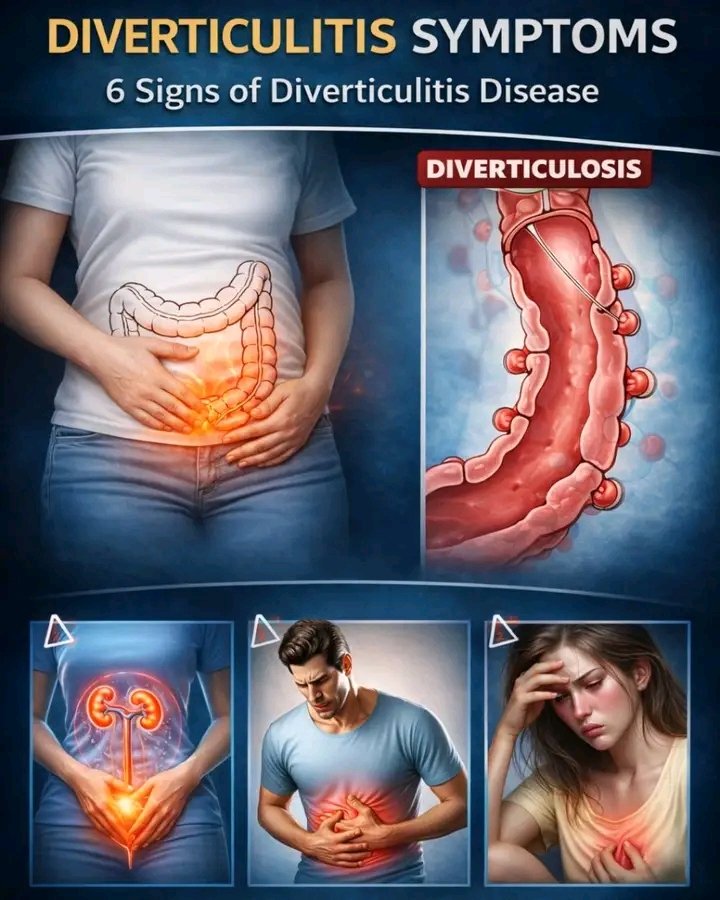
Diverticulitis is a gastrointestinal condition that occurs when small, bulging pouches (diverticula) in the digestive tract become inflamed or infected. The infographic highlights six common symptoms associated with diverticulitis disease.
1. Abdominal Pain: Typically, patients experience persistent, localized pain in the lower left abdomen, often felt as a sharp or cramping sensation. The pain may worsen with movement or eating.
2. Diverticulosis Development: Diverticulosis refers to the presence of diverticula (small pouches) in the colon wall. When these pouches become inflamed, it progresses to diverticulitis.
3. Lower Abdominal Discomfort: Individuals may feel tenderness or swelling in the lower abdomen, often accompanied by a sensation of bloating or gas.
4. Altered Bowel Habits: Symptoms can include changes in bowel movements such as constipation or diarrhea, sometimes alternating between the two.
5. Fever and Malaise: Infection may lead to fever, nausea, or a general feeling of illness (malaise), indicating the body is fighting an infection.
6. Severe Complications: In advanced cases, diverticulitis can cause intense pain, rectal bleeding, or systemic infection, requiring medical intervention.
Management & Prevention
– Diet: A high-fiber diet helps prevent diverticula formation and reduces symptom severity. Include fruits, vegetables, and whole grains.
– Hydration: Adequate water intake supports bowel function and prevents constipation.
– Medical Care: Consult a healthcare professional for persistent symptoms. Diagnosis often involves imaging tests like CT scans.
– Lifestyle: Regular exercise and avoiding straining during bowel movements can lower risk.
