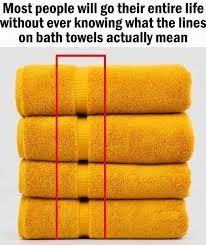
So what do they mean? It’s not a secret code. It’s textile engineering.
1. They’re called “dobby borders”
That band is woven differently from the rest of the towel. Most of the towel is “terry cloth” — those loops that soak up water. The band uses a flat weave called a dobby or jacquard weave.
2. 3 practical jobs those lines do:
1. Strength + durability: The flat weave is denser and tighter than the loops. It acts like a “belt” so the towel doesn’t tear or stretch out of shape after hundreds of washes. Towels without a border fray and warp way faster.
2. Less lint + easier folding: Looped terry sheds lint. The flat band sheds almost none, so you get fewer fuzzies on your skin and clothes. It also gives you a visual line to fold along so your towels stack neatly.
3. Branding + design: Manufacturers use that band to weave in logos, brand names, or patterns. That’s why hotel/spa towels often have the hotel name there. It’s cheaper than printing and won’t wash off.
3. Bonus: They help the towel dry better
The tighter weave absorbs water slower than the loops. So when you hang a towel, water migrates from the looped areas into the band and then evaporates. That’s why the band often feels less damp than the rest of the towel.
Myth to bust: It’s not there to tell you “which side to use” or “this side for face, this side for body.” Towels don’t have a right/wrong side. Use whichever feels softer.
Bottom line: Those lines are a small design choice with a big impact. They make your towel last longer, stack neater, and lint less. Next time you fold laundry, you’ll know why that band is there.
