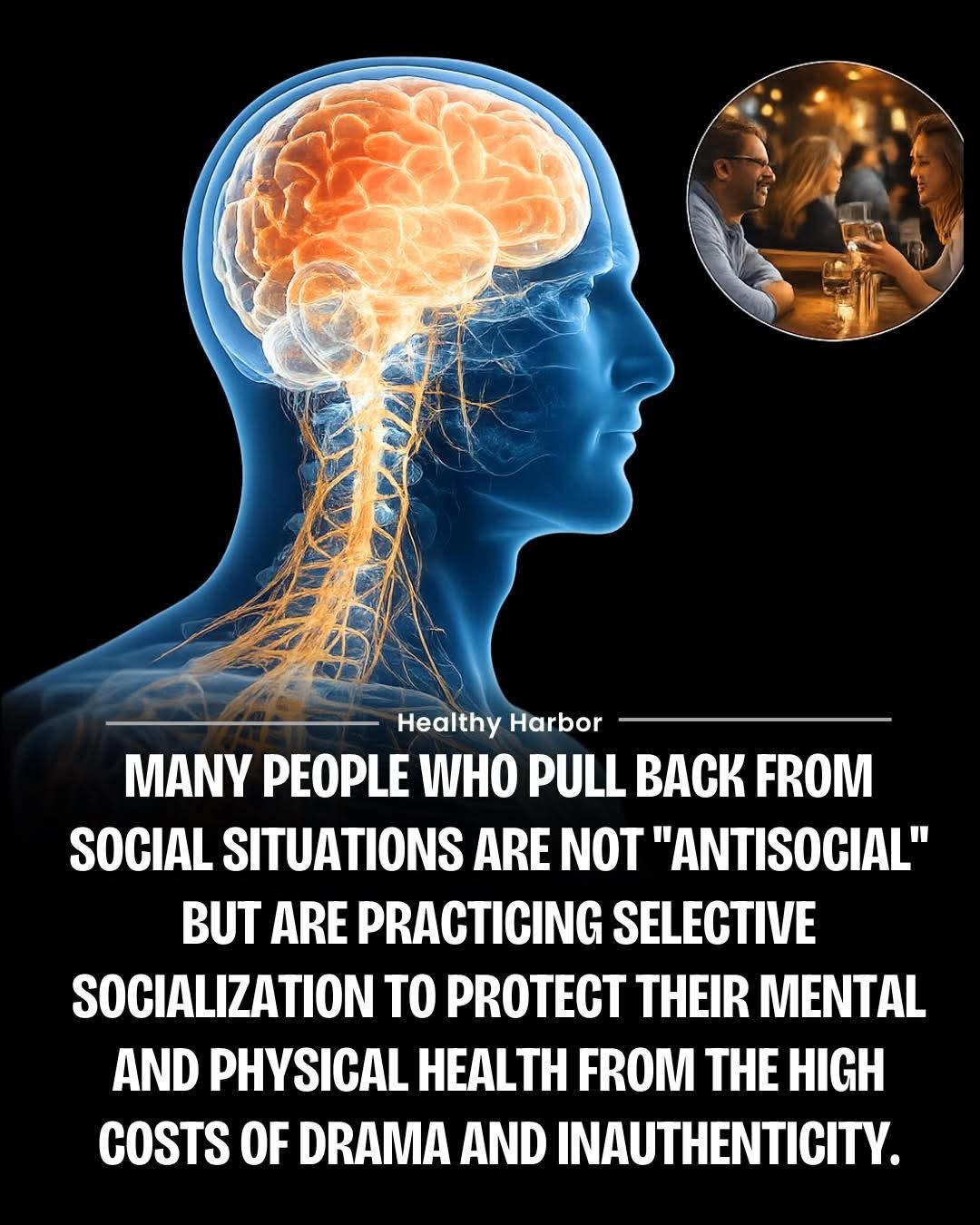
In everyday life, people often label individuals who avoid large social gatherings or prefer solitude as “antisocial.” However, research suggests that many of these individuals are simply practicing selective socialization—a conscious choice to limit social exposure in order to protect their mental and physical health.
What Is Selective Socialization?
Selective socialization is the strategy of choosing social interactions carefully, favoring authentic, low‑drama connections over indiscriminate involvement in social events. The brain, illustrated in the image with its intricate neural network, responds to social stress much like it does to physical stress, releasing hormones that can affect both mental and physical well‑being.
Why People Opt for Selective Socialization
1. Mental Health Protection: Constant exposure to social drama or inauthentic interactions can increase anxiety, stress, and emotional exhaustion. By stepping back, individuals give themselves space to process experiences and maintain emotional balance.
2. Physical Health Impact: Chronic social stress is linked to physiological effects such as elevated cortisol levels, which can weaken the immune system and affect overall health.
3. Authenticity: Many people prioritize genuine relationships over superficial engagements. Selective socialization allows them to invest time in connections that are meaningful and supportive.
The Misunderstanding of “Antisocial” Behavior
The term “antisocial” often carries a negative connotation, implying a disregard for social norms or others’ feelings. In contrast, selective socialization is a self‑regulatory behavior focused on preserving personal well‑being, not rejecting society altogether.
Practical Tips for Practicing Healthy Selective Socialization
– Assess Each Situation: Ask yourself if a social event will add value or stress to your life.
– Set Boundaries: Clearly communicate your needs to others to avoid misunderstandings.
– Prioritize Quality: Focus on nurturing a few authentic relationships rather than spreading yourself thin across many superficial ones.
– Self‑Care: Use the time saved from unnecessary socializing for activities that rejuvenate you, like exercise, reading, or meditation.
Conclusion
Choosing to pull back from certain social situations is not inherently antisocial; it can be a smart, health‑focused decision. By understanding and respecting the practice of selective socialization, we can reduce stigma around personal boundary‑setting and promote healthier social habits that benefit both mind and body.
