Tick Identification & Bite Management
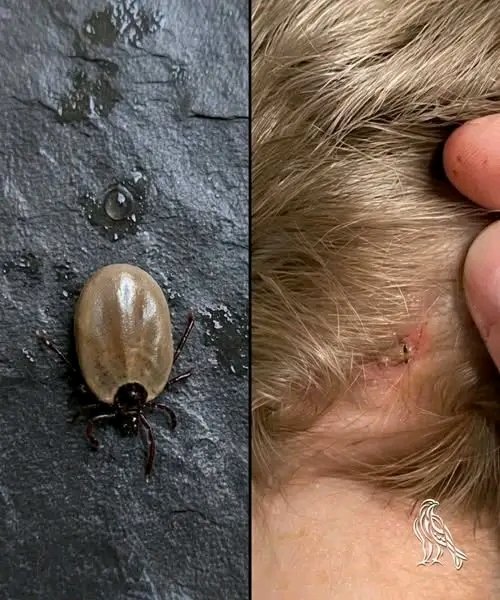
The left image shows an engorged tick, likely after feeding on blood. Ticks are external parasites that belong to the arachnid family and are known for transmitting diseases such as Lyme disease or tick-borne encephalitis.
The right image depicts a tick bite on the back of a person’s neck, with the tick still partially attached. Proper management of a tick bite involves:
1. Removal: Use fine-tipped tweezers to grasp the tick as close to the skin as possible and pull upward with steady pressure. Avoid twisting or jerking the tick.
2. Cleaning: Disinfect the bite area with soap and water or an antiseptic.
3. Monitoring: Watch for symptoms like rash, fever, or joint pain in the days and weeks following the bite, which could indicate infection.
4. Medical Attention: If the tick was attached for >24 hours or if symptoms develop, consult a healthcare professional for evaluation and possible testing for tick-borne illnesses.
Prevention Tips
– Wear protective clothing and use repellents in tick-prested areas.
– Perform regular body checks after outdoor activities to spot ticks early.
– Remove ticks promptly to reduce disease transmission risk.
