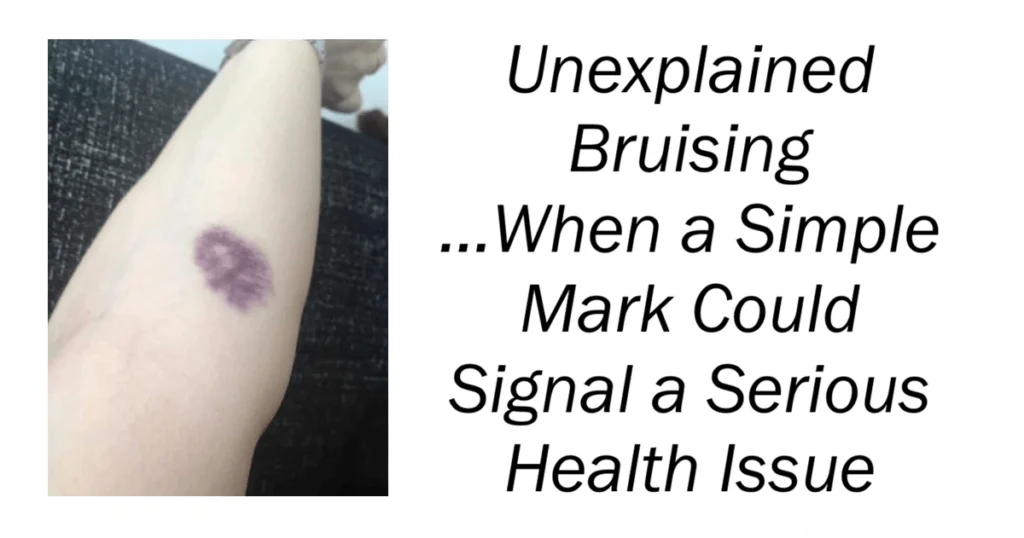
Although not every mysterious bruise is a cause for concern, frequent or sudden bruising without any obvious injury deserves attention. In some cases, it may point to underlying health conditions, including blood disorders, liver disease, or even certain types of cancer.
Why Do Bruises Appear?
Bruises occur when tiny blood vessels beneath the skin, known as capillaries, become damaged and leak blood into the surrounding tissue. This trapped blood creates the familiar blue, purple, or yellow discoloration we recognize as a bruise.
Common causes of bruising include:
- Minor bumps or injuries
-
- Certain medical conditions affecting blood clotting
However, when bruises seem to appear out of nowhere, it’s worth investigating further.
Potential Causes of Unexplained Bruising
1. Blood Disorders
Several blood-related conditions can interfere with the body’s ability to clot properly, increasing the likelihood of bruising. Conditions such as hemophilia, thrombocytopenia, and leukemia can make bruises appear more frequently and with little or no apparent cause.
-
2. Liver Disease
The liver plays a vital role in producing proteins that help blood clot. When liver function is impaired due to conditions like hepatitis or cirrhosis, easy bruising may occur as one of the early warning signs.
3. Vitamin and Nutritional Deficiencies
Your body relies on essential nutrients to maintain healthy blood vessels and proper clotting function. Deficiencies in vitamin C, vitamin K, or iron can weaken blood vessels and increase susceptibility to bruising.
4. Blood Cancers and Other Serious Conditions
In rare cases, unexplained bruising can be linked to blood cancers such as leukemia. These conditions affect the production and function of blood cells, making bruising more common. Early diagnosis is often critical for successful treatment outcomes.
When Should You See a Doctor?
While an occasional unexplained bruise may not be alarming, certain situations warrant medical attention. Consider consulting a healthcare professional if you experience:
- Bruises that appear without any known injury..
- Frequent bruising or bruises that seem unusually large
- Bruising accompanied by fatigue, fever, or unexplained weight loss
- Bruises that take an unusually long time to heal
- A sudden increase in bruising frequency
Prompt evaluation can help identify the underlying cause and ensure appropriate treatment if needed.
Tips to Reduce the Risk of Bruising
Although not all bruising can be prevented, adopting healthy habits may help reduce your risk:
- Eat a balanced diet rich in vitamin C, vitamin K, and iron
-
- Follow medication instructions carefully, especially for blood thinners
-
