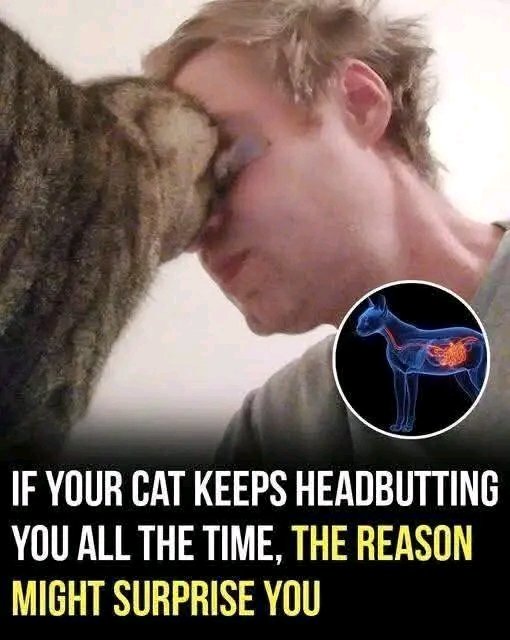
Cats are notorious for their quirky behaviors, and one of the most common yet puzzling actions is headbutting (or “bumping” their heads against you). When a feline keeps pressing its forehead into you repeatedly, it’s usually sending a clear message that most owners miss.
Why Cats Headbutt Humans
1. Scent marking: A cat has scent glands in its cheeks and forehead. By rubbing its head on you, it deposits its pheromones, claiming you as part of its territory and signaling familiarity and safety.
2. Affection & bonding: Headbutting is a friendly gesture. In cat language, it means “I trust you” and is a way of strengthening social bonds with its human companion.
3. Attention seeking: Some cats learn that headbutting gets a reaction—like petting or treats—so they repeat the behavior to get what they want.
4. Health check: Occasionally, excessive headbutting can indicate a medical issue, such as nasal irritation or skin problems, prompting the cat to seek comfort.
What the “surprise” in the meme refers to
The highlighted cat anatomy in the image shows the scent glands (orange area on the cheek and forehead). The “surprise” is realizing that the cute headbutt is actually your cat’s way of marking you with its own scent, essentially saying, “You’re mine!”
How to respond to your cat’s headbutting
– Enjoy the affection: Return the gesture with gentle petting or chin scratches, reinforcing the bond.
– Observe behavior: If the headbutting is excessive or accompanied by other symptoms (sniffing, rubbing eyes), check for skin irritation or health issues and consult a vet if needed.
– Reward appropriately: Use treats or playtime to acknowledge the interaction, ensuring the cat feels appreciated without encouraging overly demanding behavior.
Bottom line
A cat’s persistent headbutting is generally a sign of love, trust, and territorial marking. Understanding this simple feline communication can deepen your connection with your pet and make everyday interactions more meaningful.
