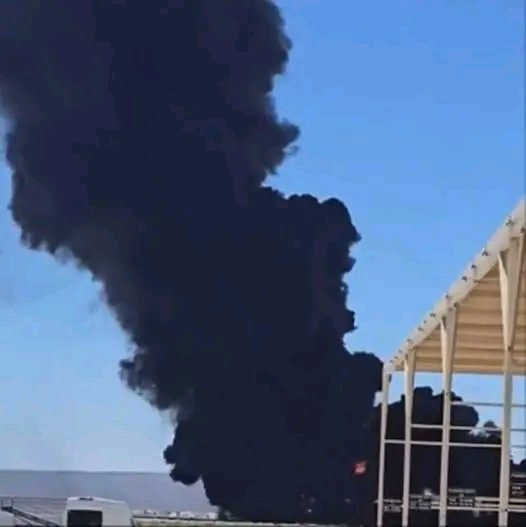
What black smoke usually indicates:
1. Fuel type: Black, sooty smoke happens when materials with lots of carbon burn with limited oxygen. Think tires, plastic, oil, rubber, asphalt, or industrial chemicals. Wood/vegetation fires usually make gray/white smoke.
2. Industrial fire vs wildfire: The roof structure on the right suggests a building, warehouse, refinery, or storage facility rather than a forest fire. The scale of the plume points to a large volume of fuel burning.
3. Health + safety concerns: Black smoke carries particulate matter and toxic compounds. Downwind areas often get “shelter-in-place” or air quality advisories from local authorities.
How to verify before sharing “breaking news”:
Viral smoke/fire images circulate fast, but many are old or from different locations. To confirm:
1. Reverse image search: Upload to Google Images to see if it matches older events.
2. Check local sources: Search the city/country + “fire” + today’s date on local news, fire department X/Twitter accounts, or emergency management pages.
3. Look for official alerts: Air quality agencies like EPA AirNow in the US, or local equivalents, post advisories when smoke affects an area.
If you’re near a fire like this:
1. Stay upwind if possible. Black smoke is worse for lungs, especially for kids, elderly, and anyone with asthma.
2. Close windows/doors and use air filters if advised.
3. Follow instructions from local fire departments and emergency services — they have the real-time info on evacuations and hazards.
Bottom line: The image shows a serious fire with heavy smoke, which is always dangerous and newsworthy. But without location/date confirmation from official sources, the responsible thing is to treat it as “unverified footage” rather than a specific current event.
